


How to navigate bespoke interior design consultations

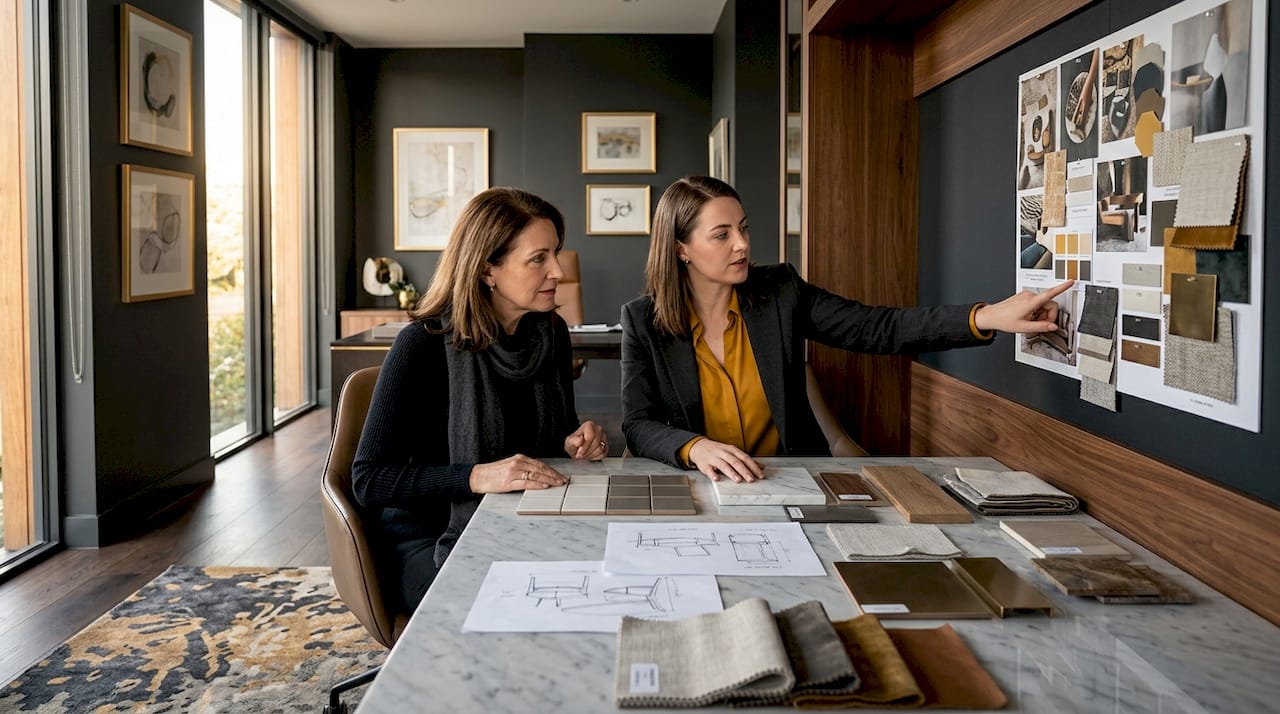
You have a clear picture in your mind: a kitchen that feels both effortlessly elegant and completely practical, or a fitted wardrobe that reflects your personal taste down to the last detail. Yet translating that internal vision into a finished, physical space is where many homeowners find themselves frustrated. Miscommunication, rushed decisions, and poorly managed expectations can turn an exciting project into a costly exercise in compromise. Understanding how a bespoke interior design consultation actually works, from the very first conversation to the final sign-off, gives you the clarity and confidence to get the result you truly deserve.
Table of Contents
Key Takeaways
Point | Details |
Preparation is key | Gather all measurements, inspiration, and requirements before your first meeting to set a solid foundation. |
Choose the right model | Decide between full-service or ad-hoc consultation to match your level of involvement and project scope. |
Step-by-step clarity | Following a thorough consultation process avoids costly mistakes and ensures results tailored to your lifestyle. |
Material choices matter | Examining finishes and samples in person makes a huge difference to satisfaction with the final outcome. |
Understanding bespoke interior design consultations
A bespoke interior design consultation is not simply a meeting where you describe what you like and a designer nods along. It is a structured, collaborative process designed to translate your lifestyle, taste, and practical needs into a fully resolved design. The benefits of bespoke design are most fully realised when both client and designer invest properly in this early phase, because every decision made here shapes everything that follows.
There are two primary consultation models worth understanding before you commit to a designer.
Consultation model | Best suited for | Typical cost | Timeline |
Full-service, end-to-end | Busy homeowners who want a seamless journey from concept to installation | Project-based fee | 3 to 12+ months |
Hourly or one-off advisory | Homeowners who want specific guidance on a defined question | Single session or a few meetings |
The full-service model covers everything: initial briefing, site surveys, concept development, material selection, technical drawings, and installation management. This is the preferred route for clients undertaking a full kitchen remodel or a whole-home furniture project, where continuity and accountability matter enormously. Turnkey design and installation of this kind suits those who value their time and want a single, trusted point of contact throughout.
The hourly model suits homeowners who already have a strong sense of direction and need expert input on a specific challenge, such as finalising a layout or choosing between two material palettes. It is collaborative and flexible, but it places more responsibility on the client to drive the process.
What to bring to your initial meeting:
Inspiration images gathered from design publications, online platforms, or your own photography
Rough floor plans or measurements of the space, even hand-drawn sketches
A realistic budget range, including any flexibility you might have
A list of your non-negotiables and your nice-to-haves
Notes on how you actually use the space day to day
Pro Tip: Bring images of spaces you dislike as well as those you love. Knowing what to avoid is just as useful to a skilled designer as knowing what to pursue.
Essential preparation for your consultation
Once you know what type of consultation suits you best, it is time to prepare for your session to maximise its impact. Thorough preparation is one of the most powerful things you can do to ensure the process runs smoothly and produces a result that genuinely reflects your vision.
Begin with the practical essentials. Accurate measurements of your space are invaluable, even if your designer will conduct their own formal site survey later. Knowing the rough dimensions helps frame early conversations about scale and proportion. Alongside measurements, gather as much lifestyle information as you can articulate: how many people use the kitchen daily, whether you entertain frequently, whether you need dedicated storage for specific items, and whether any family members have particular accessibility requirements.
A practical preparation checklist:
Gather floor plans or sketch the space with approximate dimensions
Compile a mood board of 10 to 20 images that capture your desired aesthetic
Note your preferred materials, finishes, and colour palette preferences
Define your absolute must-haves versus features you would simply like if budget allows
Set a clear budget range and identify any flexibility within it
Consider your timeline and any fixed deadlines, such as a planned move or renovation window
Research sustainable or specialist materials if these are important to your values
Preparation element | Why it matters | Time to prepare |
Accurate measurements | Prevents layout errors and wasted design time | 1 to 2 hours |
Inspiration images | Aligns visual language between you and the designer | 2 to 4 hours |
Budget range | Shapes material and specification choices from the outset | Ongoing |
Lifestyle notes | Ensures the design serves your real daily needs | 30 to 60 minutes |
Timeline clarity | Avoids scheduling conflicts with installation | 30 minutes |
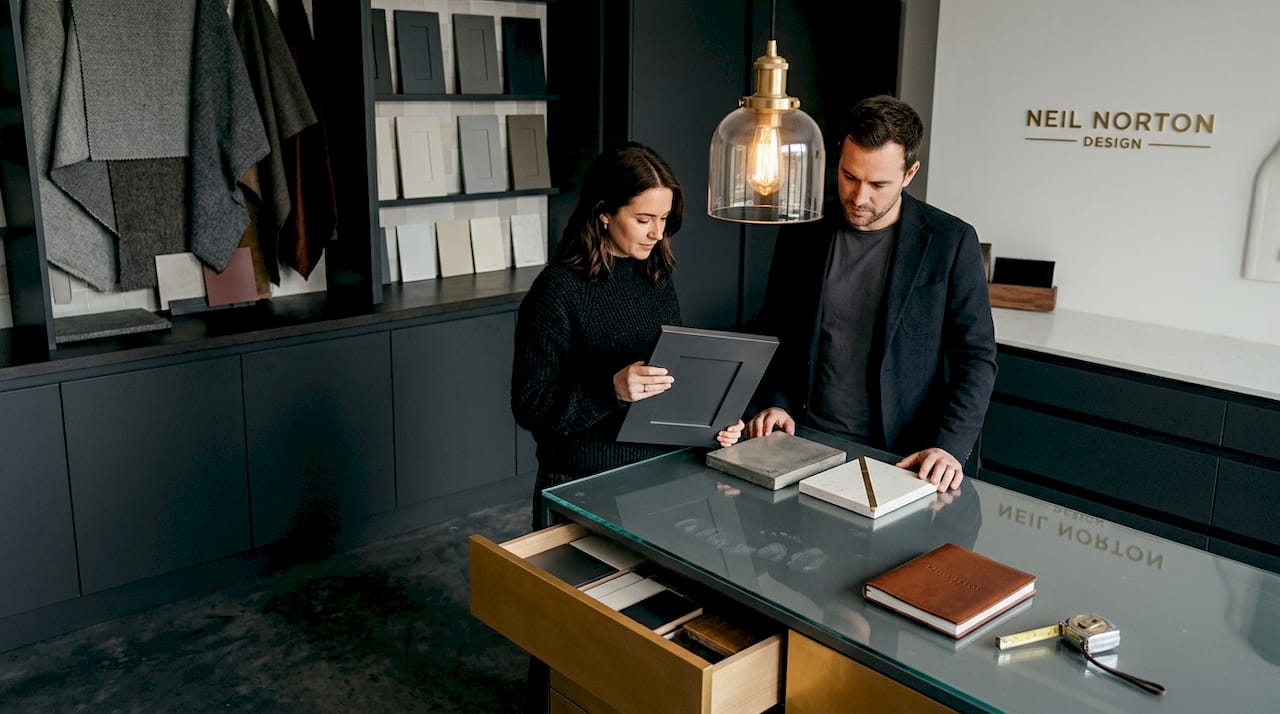
Visiting a showroom before or during your consultation is something we strongly encourage. Seeing and touching material samples in person changes everything. A finish that looks warm and inviting on a screen can feel entirely different when you run your hand across it. Exploring our custom furniture portfolio gives you a sense of the breadth of possibilities, and a showroom visit brings those possibilities into vivid, tactile reality.
Step-by-step: The custom design consultation process
Being prepared means you are ready for each phase. Here is a detailed walk-through of a typical bespoke consultation so you know exactly what to expect at every stage.
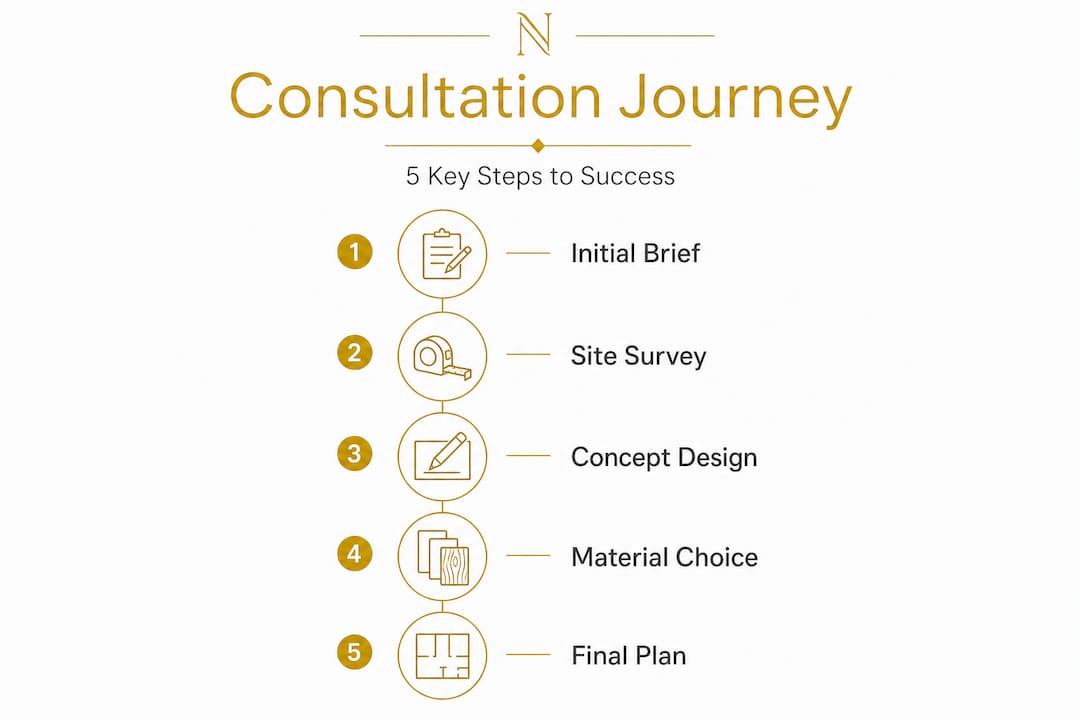
The initial brief. Your first meeting is about sharing your vision openly and honestly. Bring your mood boards, your measurements, and your lifestyle notes. A good designer will ask probing questions about how you live, not just what you like. This is the foundation on which everything else is built.
Site visit and survey. Your designer will visit the space to take precise measurements, assess structural constraints, note the position of utilities, and observe the natural light. This visit is essential for accurate technical drawings and prevents costly surprises later.
Concept development. Using your brief and site survey, the designer develops initial concepts. This typically includes mood boards, material palettes, and preliminary sketches. At Neil Norton Design, we use detailed CAD and 3D drawings alongside elevations and material samples to ensure you can visualise the finished result with complete confidence.
Layout review for daily living. This is where function meets form. For kitchens in particular, the concept of the “golden triangle” workflow, the efficient relationship between the hob, sink, and refrigerator, is reviewed to ensure the layout supports how you actually cook and move through the space. Reviewing bespoke kitchen design stages in detail at this point prevents ergonomic frustrations later.
Material and sample selection. You will visit the showroom to review physical samples of cabinetry finishes, stone worktops, hardware, and any other specified materials. This is one of the most enjoyable parts of the process and one of the most important.
Revisions and refinements. Based on your feedback, the design is refined. Most projects involve at least one round of revisions, sometimes two. This is entirely normal and is part of achieving a result that is truly right for you.
Final sign-off. Once you are fully satisfied with the design, you sign off on the technical drawings and specifications. This triggers the manufacturing and installation process. See how this plays out in practice by exploring a real kitchen project example.
“The best bespoke designs are not just beautiful to look at. They are spaces that work harder for you every single day, because every detail has been considered with your life in mind.”
Pro Tip: Ask your designer to walk you through the 3D model as if you were physically using the space. Moving through it virtually often reveals workflow issues or storage gaps that are impossible to spot in a flat plan.
Common pitfalls and how to avoid them
You have seen the ideal steps, but even the best-laid plans can go awry if you are not proactive about potential pitfalls. Knowing the most common mistakes gives you the power to sidestep them entirely.
The most frequent consultation pitfalls:
Failing to separate must-haves from nice-to-haves. Without this distinction, budget discussions become emotionally charged and decisions get made for the wrong reasons. Write your list before the first meeting and share it with your designer.
Prioritising aesthetics over workflow. A kitchen that photographs beautifully but frustrates you every morning is not a success. Always review the layout against your actual daily routines.
Vague budget guidance. Saying “we want something high-end” without a number gives the designer nothing to work with. A clear range, even a broad one, allows them to make appropriate recommendations from the outset.
Skipping the 3D review. Technical drawings are essential, but not everyone reads them fluently. Insisting on a 3D visualisation before sign-off ensures you are approving what you think you are approving.
Rushing the material selection. Choosing finishes quickly to save time often leads to regret. Live with your samples for a few days, observe them in different light conditions, and make sure they feel right before committing.
Overlooking storage specifics. Bespoke design is your opportunity to create storage that fits your actual possessions. Think about what you own and how you want to access it, rather than accepting generic solutions.
Exploring kitchen design inspiration from completed projects can help you identify what you genuinely love and what might not suit your lifestyle, before you sit down with your designer.
Pro Tip: Create a simple two-column list labelled “must have” and “would love.” Share it with everyone in your household before the consultation. Aligning expectations within the family prevents conflicting feedback during the design process.
Verifying results: Final checks before installation
A seamless experience relies on due diligence at each phase, especially when it comes to final checks prior to the installation process. This stage is not about second-guessing your designer; it is about confirming that every element is exactly as intended before manufacturing begins.
Review all technical drawings in detail. Check dimensions, door swing directions, appliance positions, and storage configurations. If anything is unclear, ask for clarification before signing off.
Confirm material specifications in writing. Ensure the finish, colour reference, and supplier details for every material are documented. Verbal agreements are not sufficient at this stage.
Check site-specific details. Verify that ceiling heights, floor levels, and utility positions have been accurately incorporated into the drawings. A discrepancy of even a few centimetres can affect the finished result significantly.
Review the installation sequence. Understand the order in which work will be carried out and confirm that any related trades, such as plumbers or electricians, are scheduled accordingly.
Conduct a final walkthrough with your designer. Go through every element of the design together, asking questions and raising any last concerns. This meeting is your final opportunity to request changes before production begins.
Did you know? Research consistently shows that clients who engage thoroughly in the final review stage report significantly higher satisfaction with their completed projects, because they feel genuine ownership of every decision made.
For fitted furniture projects, reviewing a final review for fitted furniture case study can give you a clear picture of what this stage looks like in practice and what questions are worth asking.
The hidden ROI of a well-managed consultation
Having covered the technical steps, it is worth pausing to consider the broader picture. We have worked with homeowners across London and Ireland for over 25 years, and one pattern stands out consistently: the clients who invest most deeply in the consultation process are the ones who are most satisfied with the finished result, and the ones whose homes hold their value most strongly over time.
There is a persistent misconception that a shorter, less involved consultation saves money. In reality, the opposite is almost always true. Rushing the brief leads to design revisions that cost time and money. Skipping the 3D review leads to surprises on installation day. Vague material choices lead to substitutions that compromise the overall aesthetic. Every hour invested in the consultation phase prevents far more expensive corrections later.
We also find that even experienced homeowners, people who have renovated multiple properties, often overlook ergonomic workflows or material lifespan when making decisions. A beautiful stone worktop that requires intensive maintenance may not suit a busy family kitchen. A dramatic dark cabinetry finish that looks stunning in a showroom may feel oppressive in a north-facing room with limited natural light. These are the insights that a skilled, experienced designer brings to the table, and they are insights that only emerge through a thorough, unhurried consultation process.
Reframe the consultation not as an expense but as a holistic design approach that protects your investment, enhances your daily life, and ensures the finished space genuinely reflects who you are. That is the real return on a well-managed consultation.
Begin your journey to a timeless bespoke space
Armed with a detailed understanding of the process and its long-term value, you may be ready to put these steps into action with expert guidance. At Neil Norton Design, we bring over 25 years of craftsmanship and an unwavering passion for bespoke interiors to every project we undertake.
Whether you are planning a bespoke kitchen, custom cabinetry, or a complete interior transformation, our team is here to guide you through every stage with care and expertise. We work with homeowners across London and Ireland, creating spaces that are as functional as they are beautiful. Explore our bespoke services to discover the full range of what we offer, or speak with our Marylebone interior designer team to begin your personalised consultation today. We would love to hear about your vision.
Frequently asked questions
How long does a bespoke kitchen consultation usually take?
A full-service consultation typically involves one to three meetings across several weeks, plus additional time for design development, revisions, and final sign-off before manufacturing begins.
What information should I provide in advance for a customised consultation?
Key details include floor plans or rough measurements, inspiration images, a list of desired functions and must-have features, and a clear budget range to guide material and specification choices.
Is visiting the showroom necessary during the consultation process?
Yes, showroom visits allow you to experience material samples first-hand and clarify your preferences in a way that is simply not possible when reviewing images on a screen.
What if my needs change after the design is finalised?
Revisions are possible but may incur additional fees or extend the timeline, which is why it is so important to review every detail thoroughly and ask all your questions before providing final sign-off.
Recommended


Comments