Luxury Kitchen Designers: A Guide to Bespoke Authorship and Spatial Harmony
- Neil Norton Design

- Jun 15
- 13 min read
A truly exceptional kitchen isn't found in a catalogue; it's composed through a singular architectural language that refuses to settle for generic luxury templates. You likely feel that your home deserves more than a standard showroom layout. It's often frustrating when traditional manufacturers can't grasp the nuances of a period property or the specific rhythm of your daily life. Finding the right luxury kitchen designers means seeking a partner who understands that every line, joint, and transition must be deliberate.
You deserve a kitchen where nothing is incidental. We'll show you how to select a designer who transcends mere utility to create a space composed with artistic intent and material honesty. By focusing on refined detail and spatial work, you can ensure your project quietly elevates your home through expert guidance on materiality and proportion. This article explores the interpretive process behind bespoke authorship, helping you achieve a sense of visual and tactile harmony that reflects your personal vision whilst ensuring your home remains timeless.
Key Takeaways
Understand luxury as a transcendence of function, moving from the concept of a fitted kitchen to a composed architectural space where every element is intentional.
Learn to evaluate luxury kitchen designers through their design sensitivity and their ability to interpret the unique spatial work required for your home.
Discover how material honesty and the precision of technical transitions create a sense of visual and tactile harmony that lasts a lifetime.
Gain insights into navigating the architectural language of London period properties, ensuring a seamless flow between heritage structures and modern extensions.
Explore the interpretive process of a bespoke consultation, where your vision becomes a singular expression of authorship in space rather than a generic template.
Table of Contents
Defining the Essence of Luxury Kitchen Designers in 2026
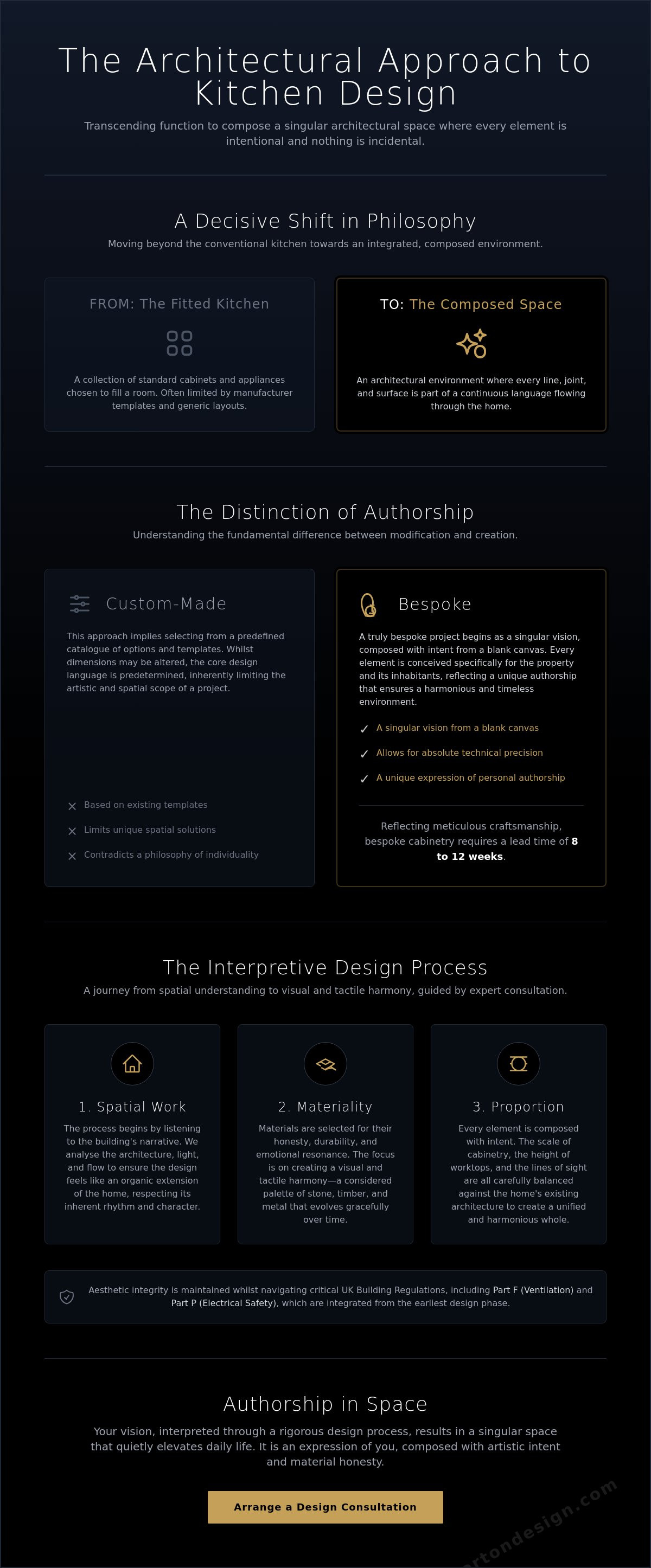
True luxury in 2026 is defined by a transcendence of function. It isn't merely about the price of a marble worktop or the prestige of a range cooker; it's about the intellectual rigour applied to the space. We have seen a decisive shift away from the traditional concept of fitted kitchens towards composed architectural spaces. In this new paradigm, luxury kitchen designers act as artistic consultants. They ensure that every line, joint, and transition is part of a continuous architectural language that flows through the home. This approach treats the kitchen as a signature piece of authorship rather than a collection of appliances.
The role of the designer has evolved into that of a spatial advisor. They don't just fill a room with cabinets; they read the natural proportions of the building to determine how the kitchen should interact with light and movement. This involves meticulous planning that goes far beyond the basics of a kitchen work triangle. While fundamental efficiency is essential, a professional designer uses it as a baseline to create a more complex and rewarding environment. The goal is to achieve a technical resolution where nothing is incidental, ensuring that the kitchen quietly elevates your daily life through refined detail and material honesty.
Bespoke vs. Custom-Made: Understanding the Distinction
Custom-made often implies a choice between existing templates, which inherently limits the artistic scope of a project. True luxury kitchen designers reject these predefined options because they contradict the philosophy of individuality. A bespoke project is a singular vision where every element is composed with intent from a blank canvas. This allows for a level of precision where the technical resolution of junctions and surfaces creates a harmonious environment. When a kitchen is truly bespoke, it reflects the authorship of the owner and the designer, ensuring the space is unique to the property. This level of craftsmanship often requires a lead time of 8 to 12 weeks for cabinetry, reflecting the care taken in every joint and finish.
The Value of Professional Design Consultation
The creative planning phase is a distinct interpretive process. It's an opportunity to separate the visionary work from the manufacturing constraints. An independent perspective ensures that your vision remains the priority throughout the renovation. During this phase, designers establish a framework for visual and tactile harmony, selecting materials that offer both durability and emotional resonance. This stage is also critical for navigating UK Building Regulations, such as Part F for ventilation and Part P for electrical safety. By integrating these requirements early, the designer maintains the aesthetic integrity of the space whilst ensuring it meets modern standards for safety and efficiency.
Materiality: Selecting finishes that possess a natural, honest quality.
Proportion: Balancing the scale of cabinetry with the home's existing architecture.
Spatial Work: Designing for the specific rhythm of a London residence.
The Interpretive Process: From Spatial Work to Visual Harmony
The interpretive process begins long before the first piece of timber is cut. For the most accomplished luxury kitchen designers, the initial site visit is an exercise in listening to the building's existing narrative. They examine how light falls across the floor at different times of day and how the primary architectural lines of the property dictate the flow of movement. This deep engagement with spatial work ensures that the finished kitchen feels like an organic extension of the home rather than an after-market addition. It is a dialogue between the new and the old, where every element is composed with intent.
Designing a high-end environment requires a balance between technical precision and artistic vision. While an ultimate kitchen design guide might provide the basics of layout, a bespoke designer focuses on the emotional resonance of the space. They consider the tactile harmony of the surfaces and how the materiality of the room will evolve over time. This sensitivity to detail ensures that nothing is incidental. Every transition between a stone worktop and a timber cabinet is a deliberate choice, resolved with the kind of precision that only comes from deep expertise. It's about creating a continuous architectural language that bridges the gap between different zones of the house.
Material Honesty and Tactile Harmony
Material honesty is the foundation of enduring design. It involves selecting surfaces that don't just look beautiful on day one but tell a story as they age gracefully. High-end design relies on the interplay of light and shadow to reveal the subtle texture of a hand-finished surface. The technical resolution of joints and surfaces is treated as an art form, where the junction between two materials becomes a point of visual interest. When you collaborate with an established artisan, you ensure that these details are handled with the necessary design sensitivity to create a space that feels deeply personal and tactile.
Proportion and the Authorship of Space
Proportion is the hidden mathematics of beauty. It dictates whether a room feels cavernous or intimate, imposing or welcoming. A singular kitchen design balances grand architectural gestures, such as a large central island, with refined details like the subtle curve of a handle or the precision of a dovetail joint. This expression of authorship in space moves beyond mere utility. It creates an environment that quietly elevates daily life, turning routine tasks into moments of sensory pleasure. By prioritising visual and tactile harmony, the designer ensures that the kitchen becomes a sanctuary that reflects your individual lifestyle whilst respecting the heritage of the building.
Evaluating Luxury Kitchen Designers: Criteria for a Singular Vision
Choosing the right partner for a high-end renovation is a decision that shapes the very atmosphere of your home. It's a search for a consultant who views the kitchen as a fine art project rather than a commercial installation. When assessing luxury kitchen designers, your focus should shift from a mere aesthetic preference to a deeper evaluation of design sensitivity. This is the ability to listen to the architecture of a room and respond with a solution that feels inevitable. It's about finding an expert who can resolve complex architectural junctions with precision, ensuring that the transition between a bespoke larder and a period wall is seamless and intentional.
Reliability is often found in the numbers, but it shouldn't come at the cost of individuality. An established artisan with over 200 happy clients provides a sense of security. It suggests they've successfully navigated the technical challenges of hundreds of projects whilst maintaining the creative spark required for a truly singular kitchen. This track record proves they can manage the practicalities of manufacturing and installation without compromising the artistic vision. It's this blend of the creative and the dependable that distinguishes a true design partner from a mere supplier. A collaborative spirit is essential, as the designer must act as a trusted advisor who respects your personal authorship whilst providing the technical precision of a master manufacturer.
The Portfolio: Searching for Architectural Language
A portfolio should be read like a collection of stories rather than a catalogue of products. Look for how the designer adapts to different environments. Do they force a specific look onto every property, or do they allow the building's own architectural language to lead the way? True authorship in bespoke kitchen design is evident when the cabinetry and furniture feel deeply rooted in their surroundings. You should see a consistent level of refined detail in every project, where nothing is incidental. Precision in the execution of joints and the thoughtful use of materiality are the hallmarks of a designer who understands that the technical resolution of surfaces is what creates visual and tactile harmony.
Communication and Creative Direction
The consultation phase is where the interpretive process truly takes hold. A skilled consultant acts as a creative director, helping you articulate desires you may not have yet put into words. They don't just ask where you want the sink; they ask how you want the space to feel on a quiet Sunday morning. This collaborative spirit is essential for moving from an abstract concept to a tangible, crafted environment. Transparency is also vital. A designer who is open about the challenges and possibilities of a space builds a foundation of trust. This ensures that your vision remains the priority, resulting in a kitchen that is a genuine expression of authorship in space.
Navigating the Architectural Language of London Residences
London is a city of layers. For luxury kitchen designers, the challenge lies in creating a space that respects the weight of history whilst embracing the requirements of modern life. High-end design in the capital is rarely a matter of working with a blank canvas; instead, it's an interpretive process that must account for the specific architectural vernacular of the property. Whether you are situated in a grand townhouse in Kensington or a contemporary apartment overlooking the Thames, the kitchen must be composed with intent to ensure it feels like a permanent part of the building's narrative.
The aesthetic of West London and Wimbledon often dictates a preference for timeless elegance that transcends fleeting trends. In these areas, the kitchen is more than a utility zone; it's a social centrepiece that reflects the authorship of the home. Achieving visual and tactile harmony in such prestigious settings requires a designer who understands the nuances of materiality and proportion. By focusing on the refined detail of every transition, you can create a space that quietly elevates your daily routine, ensuring that the technical resolution of the furniture matches the grandeur of the architecture.
Period Properties: Victorian and Georgian Challenges
Working within the confines of a Victorian or Georgian residence requires a high degree of design sensitivity. These homes often feature original cornices, high ceilings, and alcove spaces that present unique challenges for installation. Integrating bespoke cabinetry into uneven, historic walls demands absolute precision. Nothing is incidental in this process; every line and joint must be deliberate to maintain the integrity of the heritage context. Material honesty is paramount here. Selecting timbers and stones that age gracefully allows the new kitchen to enter into a respectful dialogue with the original features of the property, creating a continuous architectural language that feels both authentic and refined.
Modern London Living: The Open-Plan Narrative
The "London extension" has redefined how we inhabit our homes, often resulting in large, open-plan spaces that combine cooking, dining, and living areas. In these environments, the kitchen must act as an anchor. Defining zones through materiality and furniture rather than physical walls allows for a sense of flow whilst maintaining a clear spatial work structure. Achieving visual harmony in a multi-functional room requires a singular vision where the cabinetry feels like a piece of finely crafted furniture. If you are planning a renovation that bridges the gap between old and new, you can book a design consultation to explore how bespoke authorship can transform your living space into a cohesive architectural environment.
Optimising light and space is particularly critical in compact urban apartments. Here, the designer must use proportion as a tool to create a sense of scale and luxury. By prioritising material honesty and the precision of technical transitions, even the most constrained space can become an expression of authorship. This approach ensures that the kitchen remains a sanctuary of calm, resolved with the kind of precision that distinguishes true bespoke design from mass-produced alternatives.
Authorship in Space: The Neil Norton Design Consultation
The consultation serves as the genesis of an interpretive process, where your abstract desires begin their transition into a tangible, crafted environment. At Neil Norton Design, we view this initial dialogue as a creative partnership rather than a commercial transaction. Our unique geographic pairing of London and Ireland provides a broad operational scale, allowing us to combine metropolitan design sensitivity with the deep-rooted heritage of artisanal craftsmanship. This seasoned perspective ensures that luxury kitchen designers can read the nuances of your home with the precision required to create a space that is truly singular.
We treat every home as a fine art project, focusing on the expression of authorship in space. During these expert advisory sessions, we explore the specific architectural language of your property to ensure that the finished kitchen feels inevitable. It's about more than just cabinetry; it's about the technical resolution of junctions and the visual harmony of the entire room. By prioritising your personal vision, we act as a catalyst for lifestyle improvement, ensuring that the final result is a sanctuary of calm that reflects your individual style and lasts a lifetime.
The Neil Norton Philosophy
Our philosophy is grounded in the belief that nothing is incidental. Every line, joint, and transition is composed with intent to ensure a continuous architectural language throughout your home. We reject the idea of predefined options because they limit the artistic scope of a project. Instead, we focus on material honesty and refined detail, ensuring that every surface possesses an emotional resonance. This approach builds a sense of security and pride, as the technical precision of our manufacturing process meets the poetic vision of our designers. We don't just build kitchens; we create bespoke environments that quietly elevate daily life through superior proportion and spatial work.
Embarking on Your Design Journey
The journey from concept to reality requires a trusted advisor who can bridge the gap between creative vision and technical resolution. When you visit us in London or Ireland, you can expect a professional cadence that respects your time whilst providing the depth of detail necessary for a high-end renovation. We guide you through the complexities of materiality and spatial planning, ensuring that every element is resolved with precision. With a track record of over 200 happy clients, we provide the reliability you need for such a significant undertaking. It's time to move beyond utility and embrace a kitchen that is a genuine reflection of your personal authorship. We invite you to Transform your living space with a bespoke design consultation and discover the difference that intentional, artistic design can make to your home.
Realising Your Architectural Narrative
A kitchen composed with intent does more than satisfy a floor plan; it establishes a permanent sense of authorship within your home. True luxury is found in the technical resolution of every joint and the deliberate selection of materials that age with grace. By moving beyond predefined options, you ensure that your living space reflects a continuous architectural language. This journey requires a partner who understands that nothing is incidental, from the natural flow of light to the tactile harmony of a hand-finished surface.
As award-winning luxury kitchen designers with expertise in high-end domestic architecture since 2006, we specialise in bridging the gap between creative vision and precise manufacturing. With over 200 happy clients across London and Ireland, our studio provides the seasoned guidance necessary to navigate the complexities of spatial work and material honesty. Your home deserves a singular environment that quietly elevates your daily life through refined detail and enduring quality. It's an investment in a crafted masterpiece that respects the heritage of your property whilst embracing modern functionality.
Compose your singular kitchen vision with Neil Norton Design and begin the transformative process of creating a home that lasts a lifetime.
Frequently Asked Questions
What should I look for in a luxury kitchen designer?
You should seek a consultant who demonstrates deep design sensitivity and a portfolio that reflects a continuous architectural language. The best luxury kitchen designers don't just provide a product; they act as artistic advisors who understand the technical resolution of junctions and surfaces. It's essential to verify their track record with complex spatial work and look for evidence of material honesty in their previous projects to ensure your vision is handled with precision.
Is a bespoke kitchen worth the investment compared to a fitted one?
A bespoke kitchen offers a level of authorship and longevity that mass-market fitted options cannot match. Whilst fitted kitchens rely on predefined templates, a bespoke creation is composed with intent to fit the specific proportions of your home. This approach ensures that every line and joint is deliberate, resulting in a space that quietly elevates your daily life and adds permanent value to your property through superior craftsmanship.
How long does the professional kitchen design consultation process take?
The interpretive process of a consultation begins with an initial site visit to read the building's narrative and understand its natural light. Whilst the creative planning phase varies depending on the project's complexity, the subsequent lead time for custom cabinetry is usually between 8 and 12 weeks. This period allows for every element to be resolved with precision before the final installation, ensuring the finished environment is a singular expression of your lifestyle.
Can a luxury designer work with the existing architectural features of my London home?
Professional luxury kitchen designers specialise in integrating modern functionality with the unique heritage of London period homes. They work with original cornices, high ceilings, and uneven historic walls to ensure the new kitchen feels like an organic extension of the building. This requires a high degree of design sensitivity and a commitment to maintaining the architectural integrity of Victorian or Georgian residences whilst introducing contemporary ease.
What is the role of materiality in high-end kitchen design?
Materiality is the foundation of visual and tactile harmony within a room, moving beyond mere aesthetics to create emotional resonance. It involves selecting surfaces that possess a natural, honest quality and tell a story as they age gracefully. In high-end design, the interplay of light and texture is used to define the atmosphere, ensuring the kitchen is not just a functional zone but a sanctuary of sensory pleasure resolved with technical precision.
How do luxury kitchen designers handle small or awkward spaces?
Designers handle constrained environments by using proportion and spatial work to create a sense of scale and luxury. In compact urban apartments, every transition must be composed with intent to maximise the available light and movement. By avoiding mass-produced modules, a bespoke designer can resolve awkward junctions with the kind of precision that transforms a challenging layout into a singular architectural statement that feels open and intentional.
What are the emerging kitchen design trends for 2026?
Key trends for 2026 include "broken plan" layouts that use glazed partitions to create zones and the seamless integration of indoor and outdoor kitchen spaces. We are also seeing a shift towards custom architectural millwork over standard luxury brands to allow for unlimited design possibilities. AI-driven smart kitchens with invisible appliance integration are becoming more prevalent, allowing for a cleaner aesthetic that prioritises materiality and refined detail over visible technology.
Do I need to have a clear vision before meeting with a design consultant?
You don't need a fully formed vision, as the consultation is designed to be an interpretive process that uncovers your personal narrative. A seasoned consultant helps you articulate your unstated desires and translate them into a tangible, crafted environment. This collaborative spirit allows the designer to act as a creative director, guiding you through the complexities of proportion and materiality to reach a result that reflects your individual authorship.


Comments