The L-Shaped Kitchen: An Architectural Perspective on Bespoke Spatial Design
- Neil Norton Design

- Jun 6
- 12 min read
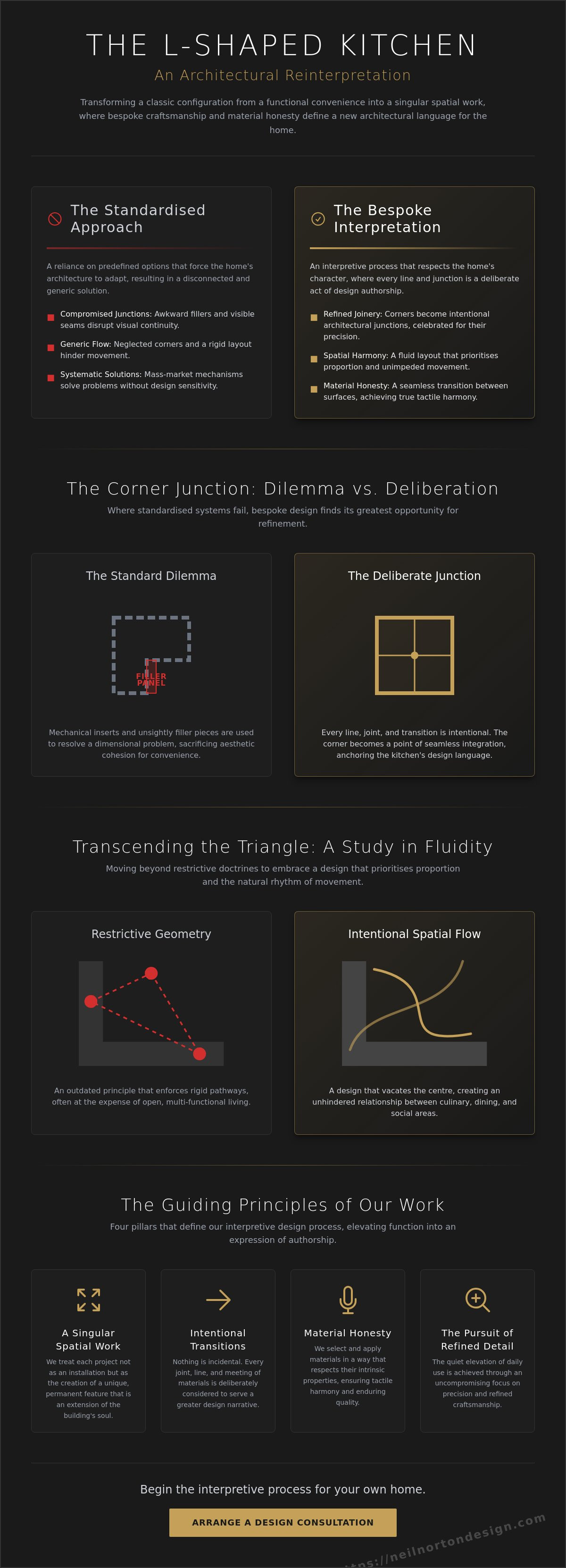
A standard kitchen layout often prioritises convenience over character, yet the most successful homes treat every corner as a deliberate architectural junction. It's common to find that a typical l shaped kitchen feels like a generic solution to a spatial problem, often suffering from disconnected flow or neglected corner junctions that lack true intentionality. When a space feels cookie-cutter, it fails to reflect the unique rhythm of your daily life or the heritage of your home.
This exploration reveals how to elevate this classic configuration into a singular spatial work, where bespoke craftsmanship and material honesty transform a functional necessity into a refined expression of authorship. You'll discover how a dedicated focus on proportion and tactile harmony ensures every joint and transition serves a greater design narrative. We will examine the ways in which intentional design sensitivity can ensure your kitchen transcends mere function to become a permanent, bespoke feature that lasts a lifetime. By treating the layout as an architectural language rather than a set of predefined options, the transition between culinary craft and residential living becomes seamless and sophisticated.
Key Takeaways
Reframe the l shaped kitchen as a deliberate architectural junction, transforming awkward corners into refined joinery through intentional design.
It's possible to move beyond the restrictive work triangle. Embrace a fluid approach to movement that prioritises proportion and spatial harmony.
Ensure your kitchen speaks the same architectural language as your home through material honesty and tactile transitions.
Learn how bespoke craftsmanship elevates daily use, where every joint and surface becomes a component of a cohesive, singular work.
Discover the benefits of an interpretive design consultation that focuses on personal authorship rather than standardised, predefined options.
Table of Contents
What is an L-Shaped Kitchen? Redefining the Classic Layout
The L-shaped kitchen is often viewed through the narrow lens of utility, yet it represents a fundamental architectural decision. At its most basic, this configuration utilises two perpendicular walls to create a singular, focused culinary zone. It's a popular and enduring L-shaped kitchen layout that serves as a cornerstone of modern domestic design. Whether situated within the compact, vertical constraints of a London flat or the expansive, light-filled residences of Ireland, the L-shape offers a versatility that few other arrangements can match. The true power of this footprint lies in its intentionality. It isn't just about where the cabinets sit; it's about how the kitchen defines the boundary between the act of creation and the experience of living.
The Geometry of Flow and Function
This layout naturally facilitates an open architectural language by vacating the centre of the room. By anchoring the cabinetry to two intersecting planes, the floor plan breathes, allowing for a fluid relationship between the two primary axes. This isn't merely a space-saving tactic. It's a deliberate choice that supports the contemporary shift towards multi-functional living. When the centre is clear, the kitchen isn't a closed-off room but an invitation. It becomes a space where movement is unhindered, allowing the culinary environment to integrate perfectly with dining or social areas without the friction of physical barriers. The resulting openness ensures that the kitchen remains the heart of the home while maintaining a sophisticated, uncluttered aesthetic.
Bespoke vs. Standardised Configurations
While mass-market brands rely on predefined options that force your home to adapt to their system, Neil Norton Design approaches the l shaped kitchen as a singular spatial work. A standardised system often results in awkward fillers or missed opportunities at the corners, leading to a disconnected flow. In contrast, a bespoke approach respects the original architecture of the room. We consider varying depths and heights that align with existing windows, alcoves, or structural beams. Nothing is incidental. Every line is calculated to ensure the cabinetry feels like an extension of the building's soul rather than an afterthought. This level of precision ensures that the pursuit of refined detail is present in every joint, creating a classic design that truly lasts a lifetime. By embracing material honesty and design sensitivity, we ensure that the transition between materials is treated with the reverence it deserves.
The Corner Junction: Designing with Intentionality and Precision
Most discussions regarding basic kitchen design principles treat the corner as a storage dilemma to be solved with mechanical inserts. This view is reductive. In a bespoke l shaped kitchen, the corner is a critical architectural junction where two planes meet. It demands refined detail and absolute precision. Modular systems often hide these intersections behind unsightly filler pieces because their predefined dimensions cannot account for the unique idiosyncrasies of a room. A truly custom-made kitchen eliminates these compromises. Every line, joint, and transition is deliberate, ensuring the cabinetry feels like a permanent part of the building's fabric.
The Art of the Seamless Transition
The visual weight of a corner can easily become oppressive if it isn't balanced with a sense of design sensitivity. We view this junction as an opportunity to anchor the kitchen's design language. By ensuring that every joint is intentional, the corner becomes a point of interest rather than a hidden void. This might involve using open shelving to introduce a lighter rhythm or employing strategic lighting to illuminate the depth of the cabinetry. The pursuit of material honesty is paramount here. When two surfaces meet, the transition should be celebrated through tactile harmony, reflecting the high-end craftsmanship that defines a home. If you are seeking to transform your living space, focusing on these subtle details is what elevates a room from functional to extraordinary.
Beyond Pull-Out Systems: Custom Corner Solutions
Mass-market brands often rely on plastic carousels and pull-out systems to "fix" the corner problem. We reject this systematic approach in favour of an interpretive process. Our designs frequently utilise deep-entry cabinetry that respects the intellectual experience of the space. This allows for a more fluid use of volume without the clatter of generic hardware. To maintain a cohesive whole, we prioritise continuous worktop graining across the junction. This ensures the materiality of the stone or timber is never interrupted by an incidental seam. By embracing this level of authorship, the l shaped kitchen transcends its basic footprint. It becomes a singular spatial work where the pursuit of refined detail ensures that daily use is quietly elevated for a lifetime.
Proportion and the Modern Culinary Environment
While mass-market retailers often obsess over the traditional work triangle, a bespoke approach prioritises the intellectual and sensory experience of the space. The triangle is a utilitarian relic that frequently fails to account for the fluid nature of contemporary life. In a high-end l shaped kitchen, we introduce an architectural approach to movement where proportion dictates the rhythm of the room. Design sensitivity allows us to look beyond the placement of appliances to see how the cabinetry interacts with light and shadow. This ensures the layout transcends mere function to become a deliberate expression of authorship, where every line is calculated to respect the home's unique volume.
Defining the Zonal Language
A singular L-shaped run provides the perfect canvas to establish a clear zonal language. Rather than a cluttered sequence of tools, we organise the space into distinct preparation and social zones. This distinction is often reinforced through the use of varying worktop heights. Such variations aren't just practical; they serve as a bold architectural statement that defines the purpose of each surface. In larger residences, where a long L-shaped run might otherwise feel overwhelming, careful attention to proportion ensures the cabinetry remains grounded and balanced. This prevents the kitchen from feeling like a corridor and instead frames it as a curated gallery of culinary craft.
The Role of the Island in an L-Shaped Plan
Integrating a central island into an l shaped kitchen transforms the room into a multi-layered spatial work. The island acts as a pivotal anchor, sharing the same architectural language as the perimeter wall runs. This combination is particularly effective for framing a luxury kitchen design as the true heart of the residence. When the island and the L-shape work in tandem, daily use is elevated into a sensory experience. Tactile harmony becomes essential here. The choice of materials, from the cool touch of honed stone to the warmth of hand-finished timber, ensures that every interaction is meaningful. This pursuit of refined detail ensures that nothing is incidental, creating a cohesive environment that supports both focused culinary work and effortless social engagement. By rejecting predefined options, we create a kitchen that isn't just a place to cook, but a permanent feature of the home's heritage.
Materiality and Integration into the Residential Language
Materiality is the soul of a bespoke l shaped kitchen. It's the tangible dialogue between the cabinetry surfaces and the architectural bones of the home. Whilst mass-market options offer a limited palette of surface-level colours, a truly custom-made kitchen relies on material honesty. This means selecting timbers, stones, and metals that don't just occupy space but age with grace. When the kitchen speaks the same architectural language as the rest of the residence, it ceases to be a separate utility room. It becomes a permanent extension of the home's identity. This cohesion is often achieved through the intentional use of fitted furniture, ensuring that the design narrative flows seamlessly from the culinary zone into the living areas.
Tactile Harmony in Cabinetry and Surfaces
Tactile harmony is found in the pursuit of refined detail. We prioritise materials that possess a natural heritage and the durability to ensure your investment lasts a lifetime. For instance, the grain of a hand-selected timber or the vein of a solid stone worktop should be treated with reverence. Texture plays a vital role in defining different areas of the l shaped kitchen without the need for jarring colour changes. We often use the contrast between brushed metals and matte hand-painted surfaces to distinguish the preparation zone from social spaces. This approach ensures the design remains classic and sophisticated, favouring the sensory experience of the material over fleeting trends. Every bespoke finish is an expression of authorship, reflecting the unique personality of the homeowner.
Contextual Design for London and Ireland Homes
Context is everything in high-end domestic architecture. A London period property demands a different design sensitivity than a sprawling residence in Ireland. In a Victorian terrace, an l shaped kitchen must respect the original proportions, often working with high ceilings and narrow footprints to create a sense of volume. Our experience in Wimbledon and across London allows us to navigate these structural idiosyncrasies with precision. In contrast, modern Irish homes might require a layout that integrates traditional warmth with contemporary openness, bridging the gap between heritage and modernity. The goal is always the same: the kitchen should feel like it has always belonged to the building's fabric. If you are ready to create a singular spatial work, our team is here to help you design a bespoke kitchen that perfectly aligns with your home's architectural language.
By treating the kitchen as a component of a cohesive whole, we ensure that nothing is incidental. The transition from a kitchen worktop to a bespoke media unit or a home office should feel deliberate and intentional. This holistic perspective is what distinguishes a Neil Norton Design project from a standardised installation. We don't just apply a system; we interpret your lifestyle and the character of your property to deliver a space that transcends function.
The Neil Norton Design Consultation: A Singular Spatial Work
The transition from a conceptual vision to a physical reality requires more than a systematic arrangement of cabinetry. Whilst mass-market retailers rely on transactional planning tools that treat your home as a set of coordinates, our approach is rooted in an interpretive dialogue. A consultation with Neil Norton Design is the beginning of the creation of a singular spatial work. It is a process that seeks to understand the sensory and intellectual experience you desire for your home. We treat the l shaped kitchen not as a predefined template, but as a bespoke architectural feature that must be tailored to the unique rhythm of your daily life.
The Interpretive Design Process
Our designers act as trusted advisors, listening intently to your lifestyle needs before any lines are drawn. This stage is critical for establishing the architectural language of the space. We move beyond the utilitarian to consider how light, proportion, and materiality will interact within the room's volume. This move from broad conceptualisation to the pursuit of refined detail is what distinguishes high-end craftsmanship from standardised manufacturing. By rejecting predefined options, we ensure that every component of your l shaped kitchen is intentional. Nothing is incidental; every joint and transition is a deliberate choice made in the service of a cohesive whole. This design sensitivity allows us to produce a kitchen that is an authentic expression of your authorship, reflecting a commitment to quality that lasts a lifetime.
Beginning Your Bespoke Journey
Engaging with our studios in London or Ireland is a seamless and reassuring experience. Based in Wimbledon and serving a discerning clientele across both regions, we have successfully navigated hundreds of projects for over 200 happy clients. This established expertise allows us to provide the professional advice necessary to ensure your environment transcends function. During the consultation, we explore the tactile harmony of different materials and the precision of our custom-made joinery. It is an invitation to envision a better living space where daily use is quietly elevated through artistic vision and technical precision. We invite you to transform your home and begin the creation of a space that truly reflects your personal heritage. To start this journey, you may book a Free Design Consultation and discover how bespoke design can redefine the heart of your residence.
Transform Your Home Through Intentional Design
The l shaped kitchen is far more than a practical arrangement of cabinetry. It's a deliberate architectural junction that, when executed with precision, defines the very character of your home. By prioritising material honesty and refined detail, we ensure that every joint and transition serves as a component of a cohesive whole. This approach moves beyond the limitations of standardised systems, allowing for a layout that respects the unique proportions of your residence. It's about creating a space that feels like it has always belonged to the building's fabric.
As an award-winning bespoke design studio, Neil Norton Design specialises in creating classic design that lasts a lifetime. We've successfully navigated projects for 200+ satisfied clients across London and Ireland, delivering singular spatial works that transcend function. Our interpretive process ensures that your kitchen is not just a utility but a personal expression of authorship. We treat every line and surface with the reverence it deserves, ensuring your investment provides enduring value.
Book your professional kitchen design consultation with Neil Norton Design to begin the pursuit of tactile harmony in your own living space. We look forward to helping you elevate the daily rhythm of your home through a truly intentional culinary environment.
Frequently Asked Questions
Is an l shaped kitchen layout suitable for small London apartments?
An l shaped kitchen is perfectly suited to small London flats as it anchors cabinetry to two perpendicular planes. This configuration vacates the centre of the room, allowing a restricted volume to breathe and feel more expansive. By utilising this layout, we create an open architectural language that integrates culinary craft with the wider living area. It's a strategic choice that avoids the cramped feel of traditional galley setups in urban environments.
How do you avoid wasted space in the corner of an L-shaped kitchen?
We eliminate wasted space by rejecting generic carousels in favour of bespoke deep-entry cabinetry. This architectural approach ensures every corner is a deliberate junction rather than a neglected void. By designing custom solutions that respect the room's unique geometry, we provide seamless access without relying on clunky mechanical inserts. This level of intentionality ensures that nothing is incidental and every cubic centimetre of the footprint is utilised with precision.
Can an L-shaped kitchen accommodate a breakfast bar or island?
Integrating a central island or a tailored breakfast bar is an excellent way to complement the perimeter cabinetry. The island serves as a pivotal anchor, sharing the same architectural language as the wall runs. This combination creates a multi-layered spatial work that defines the boundary between preparation and social zones. It elevates the daily use of the space into a sensory experience, providing a dedicated area for informal dining.
What are the best materials for a bespoke L-shaped kitchen in a period home?
The most successful materials for period homes are those that embody material honesty, such as hand-finished timbers and solid honed stones. These surfaces age with grace and reflect a commitment to high-end craftsmanship that lasts a lifetime. By selecting materials with a natural heritage, we ensure the kitchen feels like a permanent extension of the building's fabric. This tactile harmony is essential for maintaining the prestige of historic residences.
How does Neil Norton Design approach the joinery of an L-shaped configuration?
Our approach treats the joinery as a critical architectural junction rather than a mere storage challenge. Every line and joint is calculated to ensure absolute precision where the two runs of cabinetry meet. We prioritise refined detail, ensuring that transitions are celebrated through material honesty. This meticulous attention to the cabinetry's construction ensures the finished work is a cohesive whole that reflects a singular expression of authorship and durability.
What is the benefit of a professional design consultation over a standard showroom visit?
A professional consultation offers an interpretive design process that transcends the transactional nature of a standard showroom visit. Instead of selecting from predefined options, you engage in a dialogue that focuses on the creation of a singular spatial work. We listen to your lifestyle needs to inform a plan that respects your home's original architecture. This bespoke journey ensures the final environment is tailored specifically to your sensory experience.
How do you ensure an L-shaped kitchen flows naturally into a living area?
We ensure a natural flow by using design sensitivity to establish a shared architectural language between the kitchen and living areas. This often involves the use of fitted furniture that mirrors the materiality and proportion of the kitchen cabinetry. By maintaining a consistent rhythm of textures and surfaces, the culinary zone integrates perfectly with the rest of the residence. The result is a cohesive environment where the transition between spaces feels effortless.
Why is bespoke design superior to modular systems for L-shaped layouts?
Bespoke design is superior because it rejects the predefined options of modular systems that often result in unsightly filler pieces. A custom-made l shaped kitchen allows for varying depths and heights that respect structural idiosyncrasies like alcoves or low windows. This level of authorship ensures a perfect fit that modular systems simply can't replicate. By choosing a bespoke path, you invest in a permanent architectural feature that's uniquely yours and designed to endure.


Comments