Questions to Ask an Interior Design Consultant: A Guide to Architectural Intent
- Neil Norton Design

- 12 minutes ago
- 11 min read
A home that merely follows contemporary trends is a missed opportunity for true architectural authorship. Many homeowners share a quiet concern that their investment might result in a generic, catalogue-driven environment that lacks a cohesive narrative or material longevity. You seek more than just a functional layout; you desire a space where the materiality and proportion create a sense of enduring tactile harmony.
Understanding the essential questions to ask an interior design consultant is the first step in ensuring your bespoke project transcends the ordinary. This guide provides the framework to evaluate a consultant’s design philosophy, focusing on the technical precision of junctions and the honesty of the materials used. We will explore how to move beyond surface-level aesthetics to achieve a singular spatial work that reflects your personal intent. By the end, you'll have the confidence to partner with an expert who views your home as a crafted environment meant to last a lifetime.
Table of Contents
Defining the Architectural Dialogue: Why the Initial Questions Matter
Probing Philosophy: Questions Regarding Materiality and Tactile Harmony
Navigating the Consultation: Interpreting Your Singular Brief
From Concept to Craftsmanship: Evaluating the Path to Execution
The Neil Norton Approach: A Consultation Grounded in Enduring Quality
Defining the Architectural Dialogue: Why the Initial Questions Matter
The initial engagement between a homeowner and a designer is often misconstrued as a series of aesthetic decisions. In reality, it's a deep interpretive process where a lifestyle is translated into a physical form. Professional Interior design at this level transcends the mere selection of furnishings; it is an architectural dialogue that seeks to establish a shared language of materiality and proportion. Without this foundational understanding, a project risks becoming a disjointed assembly of trends rather than a cohesive home.
When considering the specific questions to ask an interior design consultant, the focus must shift from "what do you like?" to "how do you intend to live whilst in this space?" This distinction is vital. It moves the project away from a collection of products and towards a singular spatial work where every line and joint serves a purpose. The consultation phase isn't merely a preliminary step; it's the most critical investment in a residential renovation. It's the moment where the designer's vision and the homeowner's requirements merge into a definitive plan for the future.
To better understand the depth of this initial conversation, watch this helpful video regarding the essential queries a designer should pose to you:
The Role of Intentionality in Spatial Design
A sophisticated consultant views a room as a series of transitions and junctions rather than a void to be filled. You should probe how they interpret your daily movements into a cohesive layout. Ask how they ensure that nothing in the design is incidental. A high-end interior should feel composed with intent, where the relationship between a bespoke kitchen and the adjacent living area is governed by a clear architectural logic. This ensures that the tactile harmony of the space remains consistent as you move through different zones, creating an environment that transcends simple function.
Establishing Professional Authority and Trust
Navigating complex London residential layouts requires more than just a keen eye; it demands technical precision and an understanding of heritage structures. Inquire about their experience with similar projects to gauge their ability to maintain the integrity of a vision throughout its life cycle. An award-winning perspective brings a level of design sensitivity that quietly elevates daily use. This trust is built when a consultant demonstrates they aren't just selecting items, but are acting as the primary author of a crafted environment. They must be able to explain the reasoning behind every transition, ensuring the result is both durable and beautiful.
Probing Philosophy: Questions Regarding Materiality and Tactile Harmony
The architectural integrity of a home relies on more than a visual arrangement. It is found in the tactile harmony of the surfaces you touch every day. When formulating your list of questions to ask an interior design consultant, the inquiry must extend into the physical reality of the materials. Does the consultant value material honesty, or do they rely on synthetic imitations that lack soul? A singular spatial work requires a rejection of predefined, systematic options in favour of bespoke materiality that responds to the specific light and volume of your home. You should seek to understand how they envision the sensory experience of your living environment, ensuring that the weight of a door or the grain of a surface contributes to a sense of enduring quality.
The Pursuit of Refined Detail
Precision is most evident at the junctions where different elements meet. You should ask how a consultant manages the transitions between varied materials, such as the subtle shadow gap between a natural stone floor and a bespoke timber wall panel. These details must never be incidental. They are the markers of high-end craftsmanship. A truly bespoke solution is never a compromise; it is a unique response to a specific architectural context. Probing these technical aspects during the initial Questions to Ask an Interior Designer in Your First Meeting reveals whether the consultant possesses the artisan's eye for proportion and line. It is this focus on the minute that ensures a project transcends mere decoration to become a work of art.
Longevity and the Rejection of Fleeting Trends
The anxiety surrounding generic results is often rooted in the over-reliance on fleeting trends that date quickly. To avoid this, ask how the consultant ensures the aesthetic remains classic for a lifetime. This is particularly vital when considering the durability and architectural language of bespoke kitchen design. In period homes, the challenge lies in balancing contemporary innovation with the existing heritage. A seasoned expert will explain how they use material honesty to anchor a modern intervention within a historic frame. This approach ensures that the design doesn't just look good today but gains character as it ages, providing a sense of security and pride in your investment. If you are ready to begin this dialogue, you might explore our approach to custom cabinetry to see how we prioritise permanent value over transient styles.
Navigating the Consultation: Interpreting Your Singular Brief
A professional consultation is the crucible where abstract aspirations are forged into architectural reality. It's more than a simple exchange of requirements; it's a rhythmic dialogue designed to identify the nuances of how you inhabit your home. When considering the questions to ask an interior design consultant, you should focus on how they intend to translate your lifestyle into a functional layout that doesn't sacrifice artistic authorship. This phase is less about selecting items and more about the interpretive act of defining space, ensuring that the final environment serves as a singular spatial work rather than a collection of disparate products.
The flow of a high-end consultation should move from the visionary to the practical with deliberate intent. It's an opportunity to see how a designer manages the integration of complex elements, such as bespoke wardrobes or AV cabinets, into the existing architectural language of the room. These components shouldn't feel like secondary additions; they must be treated as essential extensions of the home's skeleton. By asking how these features will interact with the room's proportions and light, you ensure that the resulting design maintains a sense of tactile harmony whilst fulfilling its functional purpose.
The Conceptualisation Phase: From Vision to Plan
The transformation of a brief into a tangible plan requires a sophisticated methodology. You might ask how luxury kitchen design concepts are conceptualised as part of a cohesive whole rather than isolated installations. A seasoned consultant uses a variety of tools, from hand-drawn sketches to detailed material palettes, to illustrate the tactile and spatial experience they propose. It's also vital to understand the iterative nature of this process. A truly intentional design rarely emerges from the first draft; it's refined through successive layers of thought, ensuring that every junction and transition is carefully considered before the first piece of timber is cut.
Managing the Complexity of London Residences
London’s period homes and terraces present a unique set of architectural challenges, from restricted footprints to irregular heritage details. A consultant's ability to navigate these constraints is a hallmark of their professional authority. Inquire about their strategies for space optimisation in high-density urban environments and how they link storage solutions with the overall architectural flow. The goal is to create a sense of openness and order, where bespoke joinery acts as a catalyst for a more refined lifestyle. This requires a deep understanding of the building's history and a creative approach to contemporary living, ensuring the home remains a work of art that stands the test of time.
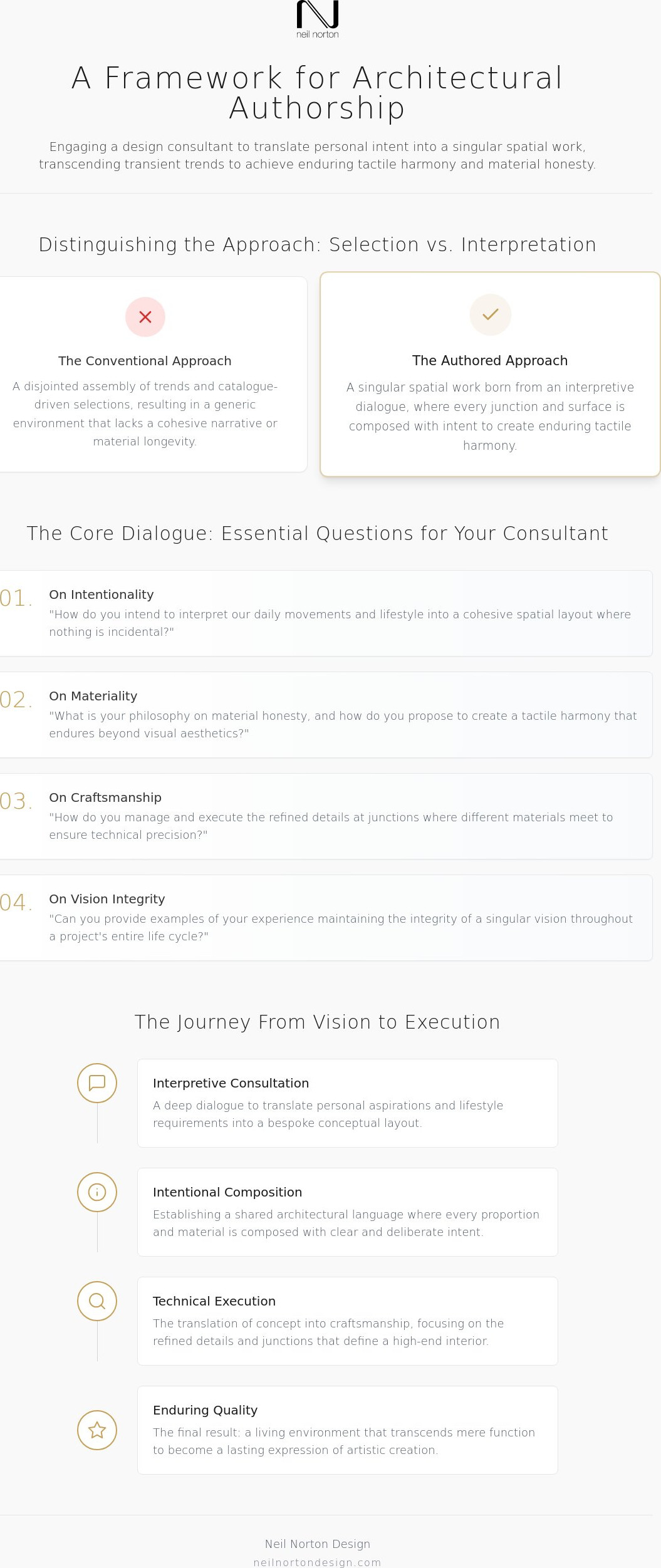
From Concept to Craftsmanship: Evaluating the Path to Execution
The transition from a conceptual drawing to a physical environment is where the true value of professional authorship is tested. It is during this phase that the designer's vision must be translated through high-end, precise craftsmanship to ensure the home becomes a singular spatial work. When refining your questions to ask an interior design consultant, it is essential to enquire about the technical precision of the build. A visionary design is only as successful as the junctions and transitions that define its physical form. You aren't merely looking for a project manager; you're seeking a catalyst for lifestyle improvement who understands the inherent materiality of the build and can guarantee its longevity.
The Synergy of Design and Craft
A sophisticated interior relies on a seamless relationship between the design consultant and the master craftsman. You should ask how the consultant ensures that every refined detail is executed perfectly by those on the workshop floor. This level of oversight is what distinguishes bespoke creation from systematic installations. Unlike mass-market solutions, fitted furniture in a high-end context requires a rigorous architectural approach where nothing is incidental. The authorship of the craftsman must align perfectly with the designer's intent, ensuring that material honesty is preserved from the first sketch to the final installation.
Post-Consultation: The Path to Completion
Once the interpretive design phase concludes in the studio, the focus shifts to the rigorous demands of execution. Homeowners should understand how the consultant maintains the integrity of the initial vision throughout the manufacturing process. Ask about their follow-through on complex elements like bespoke kitchens, home bars, and offices. This stage ensures the classic design promise is met through technical precision rather than compromise. If you are seeking to elevate your home into a work of art that lasts a lifetime, you can book a consultation at our Wimbledon studio to discuss your project's unique architectural requirements.
The Neil Norton Approach: A Consultation Grounded in Enduring Quality
Neil Norton Design operates at the intersection of architectural precision and artistic creation. Our studios in London and Tralee serve as hubs of interpretive design where the pursuit of refined detail is paramount. We don't merely manufacture cabinetry; we act as a catalyst for lifestyle improvement, ensuring that your home becomes a singular expression of authorship. Our heritage, spanning over two decades in the UK and Ireland, allows us to bring a seasoned perspective to every project. This ensures that the most critical questions to ask an interior design consultant are met with answers rooted in material honesty and technical excellence.
We understand that a home should transcend function alone. It should be a crafted environment where daily use is quietly elevated through design sensitivity. Whether we're interpreting your culinary requirements into a bespoke kitchen or creating a sanctuary in a home office, our approach remains the same. Every line, joint, and transition is composed with intent. This philosophy has guided us through hundreds of successful projects, building immediate trust with a discerning clientele who value the prestige of tailored design solutions. We pride ourselves on being a trusted advisor, blending the technical precision of a manufacturer with the artistic vision of a designer.
Bespoke Solutions for Discerning Clients
Our commitment to individuality is most evident in how we treat every room as a unique architectural context. When we engage in a fitted wardrobe design consultation london, we view the storage solution as a spatial work that must harmonise with the room's proportions. Based in Wimbledon, we're deeply embedded in the London design community, serving clients who require a blend of localised prestige and broad operational scale. We reject systematic options in favour of classic design that truly lasts a lifetime, ensuring your investment retains its value and beauty for generations.
Begin Your Architectural Journey
A professional design consultation with Neil Norton is an intentional dialogue. You can expect a process that prioritises your aspirations whilst providing the technical precision of an established artisan. We help you navigate the complexities of integrating bespoke wardrobes and AV cabinets into your living spaces, ensuring they link seamlessly with the existing architectural flow. Whether you visit our London studio or our base in Ireland, you'll find a seasoned expert ready to transform your home into a work of art. Contact us today to begin a collaboration grounded in enduring quality and refined detail.
Elevating Your Vision into a Singular Spatial Work
A home should be a reflection of intent, where every proportion and junction serves a deliberate purpose. Identifying the right questions to ask an interior design consultant ensures that your project moves beyond the surface of aesthetics to establish a shared architectural language. This process guarantees that material honesty and tactile harmony remain at the heart of your renovation, protecting your investment from fleeting trends and generic results. The path from conceptualisation to precise craftsmanship is one of interpretive authorship, where daily life is quietly elevated through design sensitivity.
Since 2006, Neil Norton Design has specialised in creating bespoke kitchens and fitted furniture that transcend function alone. Our award-winning studio has successfully navigated hundreds of projects, as evidenced by our 200+ happy clients across London and Ireland. We invite you to Book an Intentional Design Consultation with Neil Norton to begin transforming your residence into a work of art that lasts a lifetime. Your journey towards a more refined living environment starts with a single, intentional dialogue.
Frequently Asked Questions
What is the most important question to ask an interior design consultant before hiring?
The most critical question is how the consultant translates your daily habits and lifestyle into a cohesive architectural language. You should seek to understand if they view your home as a singular spatial work or merely a collection of products. This reveals their level of authorship and ensures that the final design is an intentional expression of your unique requirements rather than a generic assembly of trends.
How do I know if a consultant’s style will align with my vision for a bespoke kitchen?
Alignment is best evaluated by examining a consultant’s previous work for material honesty and the technical precision of their junctions. Look for a consistent architectural language that transcends specific trends. When considering questions to ask an interior design consultant, inquire about their process for selecting textures and proportions to ensure they prioritise the same level of tactile harmony you envision for your kitchen.
What is the difference between an interior designer and a design consultant?
An interior designer typically oversees the entire aesthetic and procurement process, whereas a design consultant often focuses on the interpretive and architectural planning phase. Consultants act as strategic advisors who specialise in defining the spatial layout and materiality of a project. They provide the conceptual framework and technical intent that guide the subsequent stages of craftsmanship and execution.
How do you balance aesthetics with functionality in a London home office?
Achieving this balance requires a philosophy where nothing is incidental. In a refined London home office, functional elements like storage and desk space are integrated into the room's proportions using bespoke joinery. This approach ensures that the office serves its practical purpose whilst maintaining a sense of spatial harmony. Design sensitivity allows for the quiet elevation of daily tasks through refined detail and material honesty.
Can I hire a consultant for the design phase only without full project management?
Many professional consultants offer a dedicated design phase that focuses on conceptualisation and technical drawings without requiring full project management. This allows you to secure a singular vision and architectural intent before moving to the manufacturing stage. It is a valuable investment for those who wish to ensure their project is composed with intent before committing to the physical build.
How do I evaluate the quality of materials and materiality in a proposal?
Evaluation should focus on the inherent durability and tactile harmony of the proposed surfaces. Ask the consultant about the sourcing of timbers and stones and how these materials will age over time. A proposal that emphasises material honesty will avoid synthetic imitations, favouring instead natural elements that gain character and ensure the design lasts a lifetime.
What should I bring to my first interior design consultation in London?
You should bring your existing architectural plans, a clear description of how you intend to use the space, and any tactile inspirations that resonate with your vision. Providing a detailed brief allows the consultant to begin the interpretive process with a clear understanding of your requirements. This initial dialogue is essential for establishing a shared architectural language from the outset of the project.
How long does a typical bespoke design consultation process take from start to finish?
The initial consultation phase typically spans several weeks as the design is refined through multiple iterations. This period allows for a deep exploration of materiality and proportion to ensure the final plan is truly intentional. Whilst the duration varies based on the project's complexity, a thorough consultative process is necessary to achieve a result that transcends simple function to become a work of art.


Comments