The Media Wall: An Architectural Approach to Bespoke Living Room Design
- Neil Norton Design

- Jun 13
- 13 min read
The most sophisticated homes treat technology not as an intrusion, but as a seamless component of the room's materiality. A bespoke media wall is far more than a simple mounting surface for a screen; it's an intentional architectural intervention that defines the character of your living space. You've likely encountered generic, flat-pack options that feel clunky or dated before the paint even dries. It's a common frustration to feel overwhelmed by the complexity of hiding cables whilst trying to maintain a cohesive aesthetic.
We believe that your home deserves a refined focal point where every joint and transition is deliberate. You'll discover how to transform your living space through intentional design that balances architectural materiality with sophisticated AV integration. This article explores how bespoke joinery ensures technology and design coexist, creating a singular spatial work that elevates your daily experience and increases your property's value. From tactile harmony to invisible cabling, we'll guide you through the pursuit of refined detail that transcends mere function.
Key Takeaways
Understand how to reframe your entertainment space as a singular architectural work rather than a mere collection of furniture.
Learn the principles of proportion and material honesty that prevent a bespoke media wall from overwhelming your room's existing architectural language.
Discover the methods of hidden engineering used to orchestrate complex AV systems whilst maintaining a clean, minimalist aesthetic.
Explore the consultative journey required to conceptualise a layout where every junction and transition is deliberate and serves a purpose.
See why investing in refined detail and high-quality joinery ensures your living space remains a timeless asset that increases property value.
Table of Contents
What is a Media Wall? Defining the Modern Architectural Focal Point
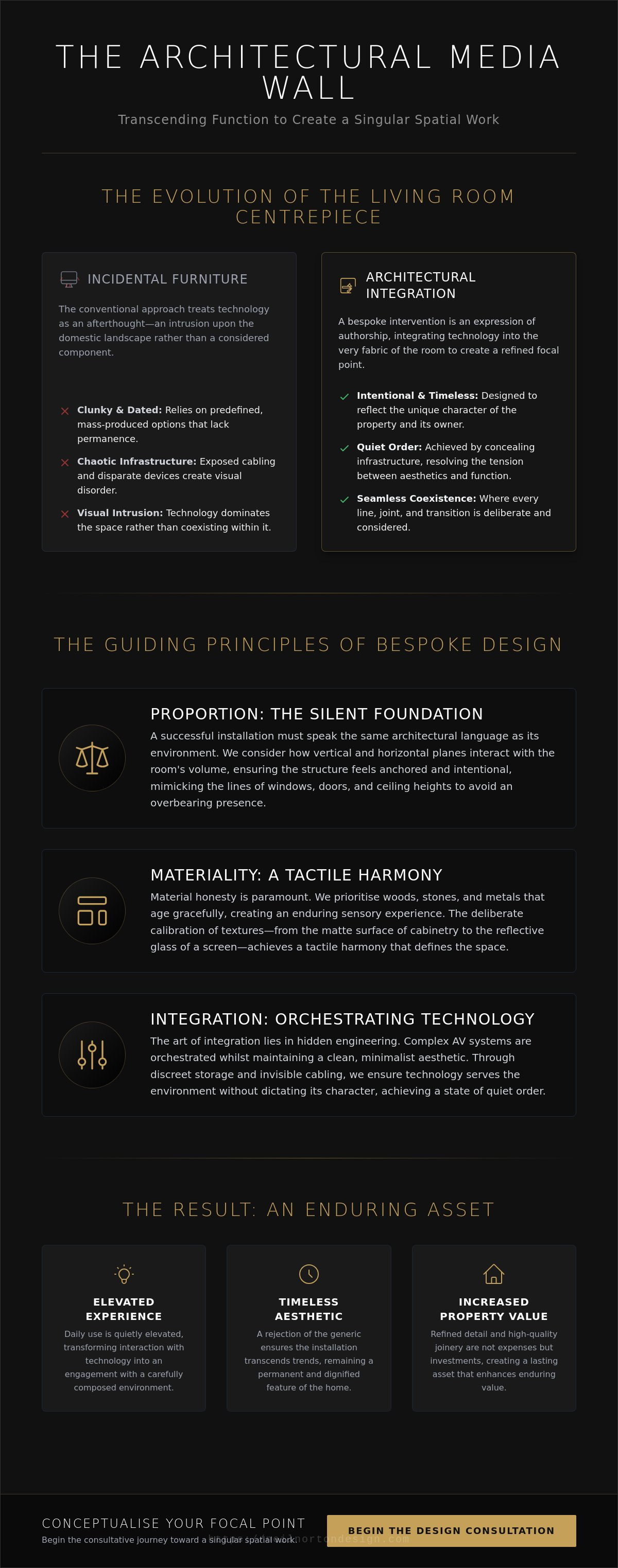
A media wall represents a profound shift in how we conceive the domestic landscape. It isn't merely a piece of furniture or a decorative surface. Instead, it's a bespoke architectural feature that integrates entertainment technology directly into the structural fabric of a room. Whilst traditional interiors often treat the television as an afterthought, placed incidentally on a stand or fixed precariously to a chimney breast, the architectural approach treats the screen as a central component of the room's materiality. By resolving the tension between technical requirements and aesthetic ambitions, this design creates a sense of quiet order. It serves as a catalyst for lifestyle improvement, effectively decluttering the visual environment by concealing the chaotic infrastructure of modern life.
This integration achieves what we call tactile harmony. It's the deliberate calibration of textures and tones amongst the screen, the cabinetry, and the surrounding surfaces. Every line, joint, and transition is considered to ensure that the technology doesn't dominate the space but rather sits within it as a natural inhabitant. While the technical origins of large-scale displays can be traced to the commercial Video wall, the domestic application requires a much more sensitive touch. It demands a marriage of high-level engineering and artisan craftsmanship to ensure the final result feels like an organic extension of the home.
The Evolution of the Living Room Centrepiece
For centuries, the hearth was the undisputed centre of the home. It provided warmth, light, and a natural gathering point. As technology advanced, the digital screen replaced the flame, yet our furniture often failed to keep pace with this change. We've moved beyond the era of furniture as a standalone object. Currently, bespoke living room furniture has adapted to larger screens and minimalist aesthetics by becoming part of the architecture itself. This shift allows the room to maintain its dignity. The media wall becomes the modern hearth, providing a refined focal point that respects the proportions of the space whilst housing the complex AV systems required for a contemporary lifestyle.
Beyond Function: Creating an Expression of Authorship
A singular spatial work should be an expression of authorship. It shouldn't rely on predefined, flat-pack options that offer a one-size-fits-all solution. Instead, a bespoke installation reflects the unique character of the homeowner and the specific architectural language of the property. When design sensitivity is applied to every junction, daily use is quietly elevated. You aren't just watching a screen; you're interacting with a carefully composed environment. This rejection of the generic in favour of the intentional ensures that the installation transcends its basic function, becoming a permanent asset that enhances both the sensory experience of the home and its enduring value.
The Materiality and Proportion of a Bespoke Media Wall
Proportion is the silent foundation of architectural joinery. Without a rigorous adherence to the room's existing scale, an installation risks becoming an overbearing intrusion rather than a refined focal point. A truly successful media wall mimics the lines of the environment it inhabits, speaking the same architectural language as the windows, doors, and ceiling heights. When we approach a design, we don't view it as an isolated unit. Instead, we consider how the vertical and horizontal planes interact with the room's volume. This ensures the structure feels anchored and intentional, avoiding the clunky appearance often associated with mass-produced alternatives.
Material honesty is equally vital. We prioritise the selection of woods, stones, and metals that don't just look exquisite today but age gracefully over decades. Whilst many homeowners seek out stylish and practical TV wall ideas, our focus remains on the enduring quality of the finish. The choice of colour and texture can transform the space. A dark, textured stone might create a bold, atmospheric statement, whilst a neutral, hand-painted finish allows the cabinetry to recede into the background, providing a subtle canvas for the room's other features.
Achieving Tactile Harmony Through Material Selection
The sensory experience of a space is defined by tactile harmony. There's a delicate interplay between the matte surfaces of bespoke cabinetry and the reflective glass of a modern screen. We often introduce natural timber grain to inject warmth into what can otherwise be a technology-heavy zone. Integrating materials like honed marble or lime-wash plaster adds a sense of permanence and weight. This combination of textures ensures the media wall feels like a singular spatial work rather than a collection of disparate parts.
Media Walls in London Period Homes: A Dialogue of Styles
Introducing a contemporary media wall into a Victorian or Georgian residence requires a sensitive interpretive approach. In these historic settings, the design must engage in a respectful dialogue with heritage features. This is particularly relevant when navigating the pursuit of refined detail in London's unique domestic architecture. Whether you're considering a setup for a grand drawing room or looking for a bespoke living room furniture consultation London, the goal is to ensure modern junctions meet original cornicing with absolute precision.
Nothing is incidental in a period home. Every transition between the new joinery and the historic fabric of the building must be deliberate. By respecting the heritage of the property whilst integrating modern AV requirements, we create environments where daily use is quietly elevated. If you're ready to explore how these principles can be applied to your own home, we invite you to discover our approach to bespoke design and see how craftsmanship can redefine your living space.
Orchestrating Technology: AV Integration and Discreet Storage
Integrating high-performance technology into a living space requires more than just making it fit. It's a sophisticated exercise in hidden engineering where the media wall acts as a conduit between digital performance and physical elegance. In a high-end design, cable management is never a secondary feature; it's a fundamental requirement of the architectural plan. We view the orchestration of technology as an interpretive process, ensuring that the infrastructure, the cabling, the junctions, and the power sources, is entirely invisible. This meticulous approach allows for the future-proofing of technology junctions, ensuring that as hardware evolves, the singular spatial work remains relevant and functional.
The intentional placement of components is vital for achieving acoustic excellence without introducing visual clutter. Speakers and soundbars are treated with the same design sensitivity as the cabinetry itself. By orchestrating these elements within the structural fabric of the wall, we ensure that sound is delivered with precision whilst the equipment remains hidden. This creates a sensory experience where the source of the audio is felt rather than seen, allowing the room's materiality to remain the primary focus. Nothing is incidental. Every line and transition is deliberate, ensuring the technology serves the environment rather than dominating it.
The Art of Discreet AV Cabinetry
Designing effective AV cabinets involves a deep understanding of both aesthetics and physics. We utilise acoustically transparent materials that allow sound to pass through cabinet fronts without compromise. Ventilation paths are equally critical. These are designed as deliberate channels that facilitate airflow to protect hardware from overheating. Rather than being an afterthought, these cooling routes are integrated into the cabinetry's architectural language. Seamless access panels are engineered into the structure, maintaining the clean lines of the design whilst allowing for effortless maintenance of the internal systems.
Integrated Lighting as a Design Element
Lighting is the final layer that defines the silhouette of the installation. We use soft, indirect lighting to trace the edges of the structure at night, transforming the media wall from a functional feature into an evocative work of art. Task lighting within the shelving highlights curated objects, creating depth and shadow that enhance the room's tactile harmony. These lighting transitions are essential for shifting the mood of the space. Whether you're engaging in a cinematic experience or hosting a social gathering, the illumination can be adjusted to reflect the desired atmosphere. This ensures that daily use is quietly elevated through intentional design sensitivity, making the space as versatile as it is beautiful.
The Design Consultation: Planning Your Singular Spatial Work
The creation of a truly bespoke media wall begins long before the first piece of timber is cut. It's an interpretive journey that transforms a client's initial vision into a precise architectural plan. Unlike mass-market systems that rely on standardised modules, our approach treats the project as a singular spatial work where nothing is incidental. We believe that a successful design is born from a deep collaboration between the designer and the homeowner. This ensures that every joint, line, and transition is intentional, reflecting the unique authorship of the property and its inhabitants.
Professional advisory sessions are essential for navigating the complexities of high-end joinery. We don't merely ask where the screen should be placed; we investigate how the room's existing architectural language can be enhanced through the installation. By rejecting the "application of a system" in favour of the "creation of a work," we avoid the pitfalls of clunky, ill-fitting installations that often plague generic options. Every detail is debated and decided with sensitivity, ensuring the final result serves as a permanent expression of quality that transcends fleeting trends.
Conceptualising the Layout: Proportions and Flow
Before drawing a single line, a designer must assess the room's volume and the behaviour of natural light throughout the day. Sightlines are a critical consideration. We ensure the media wall is perfectly positioned for the viewing experience whilst respecting the natural flow of the living space. We balance "open" display areas, meant for curated objects and books, with "closed" storage to maintain a harmonious facade. This creates a rhythmic composition where the technology is present but never intrusive, allowing the room to breathe.
The Rejection of Predefined Options
True bespoke design requires a complete departure from standard cabinet sizes. Achieving a tailored fit means accommodating specific AV components, from large-format screens to high-fidelity speakers, with absolute precision. Our consultants guide you through the pursuit of refined detail, ensuring that personal collections are housed in a way that feels curated rather than cluttered. This level of customisation is simply not possible with predefined options, which often leave awkward gaps or require unsightly filler panels.
If you're ready to move beyond generic solutions and invest in an architectural feature that lasts a lifetime, we invite you to book a design consultation with our expert team to begin the journey of transforming your home.
Conclusion: Why Bespoke Planning Transcends Function
A bespoke media wall, when conceived with sensitivity and precision, becomes a permanent asset to the home. It transcends its primary function as a technical enclosure to become an enduring expression of quality that resonates with the room's existing architectural language. We believe that fitted furniture should never be a mere application of a system. Instead, it should be a singular spatial work where nothing is incidental. The success of such a design isn't measured solely by the screen's size or the system's technical complexity. It's found in the quiet moments when the screen is dark. In these times, the tactile harmony of the materials and the deliberate nature of every joint provide a sense of security and pride that mass-produced options can't replicate. The environment becomes an expression of authorship, reflecting the unique character of the homeowner whilst elevating the sensory experience of the room.
The pursuit of refined detail ensures that the installation doesn't just house technology; it orchestrates it into a cohesive whole. By balancing architectural materiality with sophisticated integration, we create spaces where technology and design coexist in perfect equilibrium. This intentional approach ensures that your living space remains a refined, intentional focal point that adds significant value to your property. It's about creating a home where daily use is quietly elevated through design sensitivity and a commitment to material honesty. When you choose a bespoke path, you aren't just buying furniture. You're commissioning a work of craftsmanship that will stand as a classic centrepiece for decades to come.
Investing in Classic Design that Lasts a Lifetime
Fleeting trends often prioritise immediate visual impact over long-term relevance. In contrast, timeless architectural joinery focuses on the enduring qualities of proportion and craftsmanship. By choosing a bespoke media wall, you ensure your installation remains relevant even as technology evolves. The internal infrastructure is designed to be adaptable, whilst the exterior remains a classic testament to high-end design. There's a profound pride in owning a singular work of authorship that has been tailored specifically to your lifestyle. This longevity is the ultimate value proposition, distinguishing bespoke solutions from the disposable nature of mass-market alternatives.
Your Next Steps in Architectural Transformation
We encourage you to view your living room as a canvas for intentional design. The same principles of proportion and materiality that define our living room solutions can be applied throughout your home. There's a natural synergy between these entertainment zones and other highly personal areas, such as bespoke dressing rooms. Both require a deep understanding of luxury storage and a commitment to precision junctions. We invite you to begin your own architectural journey by booking a professional consultation. Our team is ready to help you conceptualise a space that transcends function and reflects your unique vision for a bespoke home.
Transform Your Living Space Into a Singular Spatial Work
A media wall represents the ultimate intersection of technical precision and artistic vision. By prioritising material honesty and the pursuit of refined detail, you transform a functional necessity into a permanent expression of quality. We've explored how the delicate balance of proportion and the orchestration of invisible technology ensure that your living space remains a sanctuary of tactile harmony; where every line and junction is intentional. It's about creating an environment that transcends basic function to become a true expression of authorship.
As an award-winning bespoke design studio with specialist expertise in London and Ireland residential projects, Neil Norton Design brings a seasoned perspective to every architectural challenge. We've successfully navigated hundreds of projects for 200+ happy clients, ensuring that daily use is quietly elevated through design sensitivity. Your home deserves a focal point that is both creative and dependable. To begin the journey of redefining your interior, we invite you to Book a Professional Design Consultation with Neil Norton Design. We look forward to helping you create a classic design that lasts a lifetime.
Frequently Asked Questions
What exactly is a media wall and how does it differ from a TV unit?
A media wall is a bespoke architectural feature that is built directly into the structural fabric of your room, unlike a standalone TV unit which is merely an incidental piece of furniture. Whilst a unit is a secondary addition, the wall is an intentional intervention that considers the room's materiality and proportion as a cohesive whole. It creates a refined focal point where the screen and cabinetry sit in tactile harmony, transcending mere function.
Do I need a professional designer to plan a media wall in my London home?
Engaging a professional designer is vital for ensuring your installation respects the specific architectural language of your London home. A designer provides the specialist expertise needed to navigate complex sightlines, airflow requirements, and intricate cable management. This interpretive approach avoids the clunky look of generic systems. It ensures that every line and joint is deliberate, resulting in a singular spatial work that increases your property's value and aesthetic appeal.
Can a media wall be installed in a period property with original features?
A bespoke installation can be sensitively integrated into period properties by creating a respectful dialogue between contemporary joinery and original features. We focus on the pursuit of refined detail at the junctions where new cabinetry meets historic cornicing or skirting. By matching the scale and material honesty of the existing architecture, the feature feels like an organic extension of the home rather than an intrusion on its heritage.
How do you hide cables and AV equipment in a bespoke media wall?
We conceal technology through a sophisticated exercise in hidden engineering, utilising dedicated internal channels and discreet AV cabinets. Cable management is a fundamental requirement of our planning process, ensuring that no wires are visible to disrupt the visual order. Every access panel and ventilation route is deliberate, allowing for effortless maintenance whilst maintaining the architectural integrity of the cabinetry's clean, minimalist lines.
What materials are best for creating a luxury, high-end media wall?
The finest installations utilise materials that offer both durability and material honesty, such as natural timber grains, honed stone, and premium hand-painted finishes. These selections ensure that the focal point ages gracefully over time. By balancing matte cabinetry with the reflective surfaces of the screen, we achieve a tactile harmony that feels exclusive. The goal is to select materials that resonate with the room's character and last a lifetime.
How do I ensure my media wall doesn’t become dated as technology changes?
Future-proofing is achieved by designing flexible internal junctions that can accommodate evolving hardware within the media wall structure. We ensure that ventilation paths and cable runs are generous enough to support future upgrades without compromising the external aesthetic. This intentional design sensitivity means your investment remains a relevant focal point for decades, as the cabinetry is built to a standard that outlasts fleeting digital trends.
Is it possible to integrate a fireplace into a bespoke media wall design?
Integrating a fireplace is a sophisticated way to recreate the traditional hearth within a modern architectural framework. We specialise in designing thermal barriers and deliberate ventilation paths that protect your screen and AV equipment from heat. This approach allows the fireplace to sit in proportion with the cabinetry, creating an evocative centrepiece that provides both warmth and cinematic atmosphere when the screen is not in use.
What is the typical process for a design consultation with Neil Norton Design?
The consultative journey begins with an in-depth assessment of your room's volume, natural light, and existing architectural language. We move from initial conceptualisation to a final, detailed plan through a collaborative process that treats your home as a unique canvas. This advisory phase is essential for ensuring that every transition is intentional and that the final work serves as a true expression of your personal authorship.


Comments