The Value of a Design Consultant: Elevating Residential Architecture Through Refined Detail
- Neil Norton Design

- Jun 27
- 11 min read
Updated: Jul 11
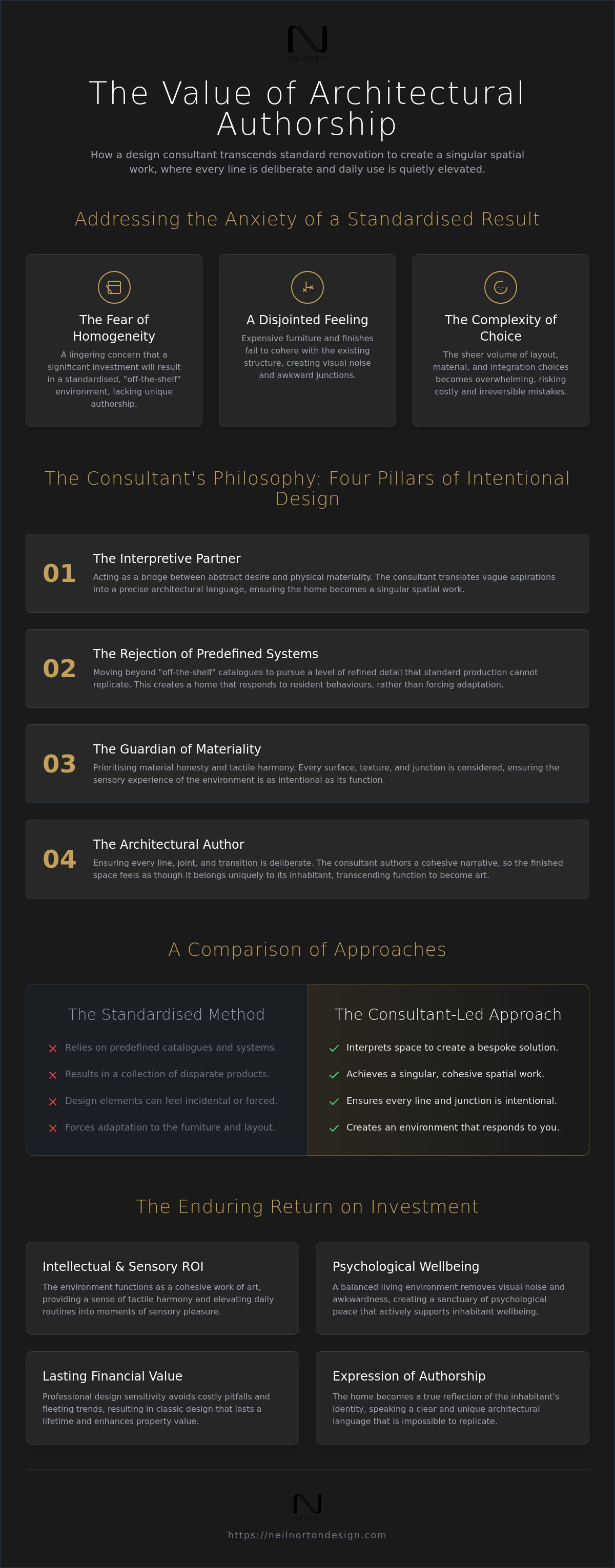
A home isn't merely a collection of rooms; it's a singular spatial work where every junction and transition should feel intentional. You might feel a lingering anxiety that your renovation will result in a standardised look, or perhaps you're overwhelmed by the sheer complexity of layout choices. Recognising the true value of a design consultant is the first step in moving beyond these fears, ensuring your home doesn't just function, but speaks a clear architectural language that reflects your own authorship.
It's a common concern that even the most expensive furniture won't quite fit the existing structure, leaving the space feeling disjointed. In this guide, you'll discover how a professional partner transcends standard renovations to create a cohesive narrative for your property. We'll explore how material honesty and a pursuit of refined detail can transform your environment into a place where daily use is quietly elevated and every line is deliberate. By the end, you'll understand how to avoid costly layout mistakes and achieve a sense of tactile harmony throughout your home.
Table of Contents
Defining the Value of a Design Consultant in Bespoke Home Projects
Beyond Functionality: The Intellectual and Sensory ROI of Professional Guidance
Design Consultant vs. Interior Designer: Navigating the Nuances of Authorship
From Concept to Materiality: How Consultation Prevents Incidental Design
Neil Norton Design: A Singular Approach to Consultation in London and Ireland
Defining the Value of a Design Consultant in Bespoke Home Projects
The true value of a design consultant lies in their ability to perceive a home as a living, breathing entity rather than a series of square metres to be filled. In high-end London renovations, the consultation phase is often the most critical stage of the entire process. It is during these initial interpretive sessions that the architectural language of the house is either reinforced or lost. A consultant acts as a catalyst for lifestyle improvement, looking past the immediate need for storage to understand how a resident moves through their environment. They don't simply apply a system; they interpret a space.
Whilst the broad industry focuses on defining interior design as a blend of art and science, the consultant’s specific role is to act as a bridge between abstract desire and physical materiality. This interpretive process ensures that nothing is incidental. Every decision, from the placement of a bespoke kitchen island to the ambient lighting of a private bar, is filtered through a lens of design sensitivity. By treating the home as a singular spatial work, the consultant ensures that the final result is an expression of authorship rather than a collection of disparate products.
The Rejection of Predefined Systems
Standardised manufacturers often rely on "off-the-shelf" catalogues that force a home to fit into a predefined mould. A design consultant rejects these limitations. They pursue a level of refined detail that standard production cannot replicate. This approach considers specific resident behaviours, such as how one prefers to host in a custom-made bar or the quiet requirements of a home office. By moving beyond catalogues, the consultant achieves a tactile harmony where the materiality of every surface feels intentional. It's about creating a home that responds to you, rather than you adapting to the furniture.
The Consultant as an Architectural Author
Many homeowners begin with vague aspirations, perhaps a feeling or a specific texture they admire. The consultant’s role is to translate these into a precise architectural language. They ensure that every line, joint, and transition is deliberate. This "expression of authorship" means the finished space feels like it belongs uniquely to the inhabitant. In a bespoke wardrobe or AV cabinet, the junctions are not merely functional; they are beautiful. This commitment to material honesty ensures that the home transcends mere function to become a work of art that lasts a lifetime. Through this guidance, daily use is quietly elevated, turning routine interactions into moments of sensory pleasure.
Beyond Functionality: The Intellectual and Sensory ROI of Professional Guidance
The investment in a residential project is often measured in square footage or material costs. However, the true intellectual and sensory return on investment (ROI) stems from a design sensitivity that transcends basic utility. When you consider the value of a design consultant, you're looking at the difference between a house that contains objects and a home that functions as a cohesive work of art. This professional guidance ensures that every element, from the grain of the timber to the weight of a cabinet handle, contributes to a sense of material honesty.
Classic design that lasts a lifetime isn't an accident. It's the result of rigorous planning that considers how a space will age alongside its inhabitants. Beyond the aesthetic appeal, there is a clear financial value of a designer regarding the avoidance of pitfalls and fleeting trends that require frequent updates. A balanced living environment offers psychological peace. It removes the visual noise of mismatched surfaces and awkward junctions, creating a sanctuary that supports your wellbeing.
Tactile Harmony and Materiality
A consultant manages the complex interplay of light, texture, and proportion to ensure that every room speaks the same architectural language. This pursuit of tactile harmony is particularly evident in the transition between different zones of the home. Whether it's the smooth surface of a bespoke kitchen island or the rich texture of custom-made wardrobes, the materials should feel like parts of a deliberate whole. Nothing is incidental. By selecting materials with high design sensitivity, the consultant ensures that the home feels grounded and authentic. You can explore how these elements come together in a bespoke studio environment where materiality is at the heart of every project.
Quietly Elevating Daily Life
Design sensitivity is most powerful when it's invisible. It manifests as the lack of friction in your morning routine or the effortless way a home office transitions into a space for evening relaxation. The intentionality behind the placement of bespoke storage or an AV cabinet ensures that technology serves the resident rather than dominating the room. This refined detail reduces the mental load of modern domestic life. When every object has a designated, beautifully crafted place, the experience of daily use is quietly elevated. The home becomes an expression of authorship that standard renovations simply cannot achieve.
Design Consultant vs. Interior Designer: Navigating the Nuances of Authorship
While the terms are often used interchangeably, the distinction between an interior designer and a design consultant is fundamental to the success of a high-end project. An interior designer frequently focuses on the final layers of a home, such as soft furnishings, colour palettes, and decorative styling. In contrast, the value of a design consultant lies in their focus on the structural and conceptual integrity of the space. They act as the architect of the interior experience, ensuring that the fundamental proportions and materiality of a room are established long before a single piece of furniture is placed. This advisory role is interpretive, seeking to translate a client's lifestyle into a permanent architectural language.
A design consultant serves as the essential bridge between the homeowner's vision and the craftsman's technical execution. Rather than being driven by sales quotas or the application of a standardised system, the consultant is committed to the creation of a singular spatial work. They prioritise the intellectual and sensory experience of the environment, ensuring that every joint and transition is deliberate. By maintaining this high-level perspective, they protect the project from becoming a collection of disjointed features, instead guiding it toward a cohesive expression of authorship that reflects the resident's unique requirements.
The Specialist Perspective
Specialising in the consultation phase allows an expert to provide unbiased creative direction that isn't tethered to specific product lines or manufacturing limitations. A seasoned expert, having navigated hundreds of bespoke projects, understands how to anticipate layout complexities before they become costly mistakes. This depth of experience is vital for achieving a sense of tactile harmony across the home. Neil Norton Design integrates this philosophy into every project, particularly when approaching luxury kitchen design, where the interplay of light and proportion must be handled with absolute design sensitivity.
Avoiding the Pitfalls of Standardisation
In projects without professional consultation, design choices often become incidental. These are decisions made by default or through the limitations of a manufacturer’s catalogue rather than through genuine intent. Such incidental design leads to a standardised look that lacks character and fails to respond to the specific behaviours of the inhabitants. A consultant protects the bespoke nature of a renovation by ensuring that nothing is accidental. From the precise depth of a wardrobe to the seamless integration of an AV cabinet, every element is part of a refined technical plan. This rigorous pursuit of detail ensures that the final space transcends mere function to become a tailored environment that quietly elevates daily life.
From Concept to Materiality: How Consultation Prevents Incidental Design
The journey from a conceptual thought to a physical joint is where the value of a design consultant becomes most tangible. It's a transformation that requires an interpretive bridge between what a resident feels and what a craftsman builds. Without this rigorous oversight, design choices often become incidental, governed by the convenience of a manufacturer rather than the needs of the space. True luxury is found in the intentionality of every line. It ensures that the architectural language of the home remains consistent from the entrance hall to the private dressing room.
A refined technical plan is more than a blueprint; it's a manifesto of how you intend to live. When a consultant manages this process, they ensure that the selection of cabinetry, surfaces, and junctions is never accidental. They look for the quiet opportunities to elevate daily use, such as the way a surface meets a wall or how a handle feels to the touch. This sensitivity prevents the standardised look that plagues many high-end renovations, replacing it with a singular spatial work that feels like a natural extension of the building’s history.
The Interpretive Consultation Process
In our dedicated sessions across London and Ireland, the focus remains on analysis. A consultant doesn't start with a catalogue; they start by observing the existing architectural language, particularly in period homes where proportions are often unique. We move from broad inspiration to a pursuit of refined detail that considers every resident behaviour. This process filters out the noise of fleeting trends, focusing instead on material honesty and enduring quality. It's an interpretive dialogue that turns vague aspirations into a precise technical reality.
Materiality and Proportion
Achieving tactile harmony requires a delicate balance of materiality. A consultant ensures that a bespoke kitchen design respects the specific proportions of the room, rather than overwhelming it. This same singular vision must unite diverse elements, such as wardrobes and AV cabinets, so they don't appear as isolated furniture pieces. Instead, they become part of the house itself. Every transition is deliberate, ensuring the home feels composed and intentional. To begin your own journey toward a singular spatial work, book a consultation with our bespoke studio.
Neil Norton Design: A Singular Approach to Consultation in London and Ireland
For twenty years, Neil Norton Design has operated at the intersection of architectural rigour and bespoke artistry. With a portfolio spanning more than 200 successful projects, we've established a reputation as trusted advisors who understand that a home is an expression of authorship. Our studio doesn't merely manufacture cabinetry; we act as a catalyst for a total lifestyle improvement. By bridging the gap between traditional craftsmanship and modern architectural requirements, we ensure that every project we undertake becomes a singular spatial work that reflects the unique identity of its inhabitants.
The unique geographic pairing of London and Ireland informs our entire philosophy. It allows us to blend the deep-rooted heritage of Irish craftsmanship with the sophisticated, fast-paced demands of London’s high-end residential market. The value of a design consultant from our studio is most evident during our professional advisory sessions. These meetings are not sales exercises but interpretive dialogues focused on the conceptualisation of space. We listen to your aspirations and translate them into a precise architectural language, ensuring that the final result is both intellectually satisfying and sensory in its execution.
The London Aesthetic: Wimbledon and Beyond
Tailoring our design consultations to the specific needs of London residences requires a high degree of design sensitivity. From our Wimbledon-based bespoke studio, we help homeowners navigate the complexities of urban architecture. Whether you're renovating a sprawling Edwardian villa or a compact contemporary apartment, the constraints of the building are treated as opportunities for refined detail. We specialise in handling these architectural nuances, ensuring that bespoke kitchens and wardrobes integrate seamlessly into the existing structure. Our localized prestige in Wimbledon is built on this ability to provide a personal, exclusive service that respects the history and proportion of every property.
A Legacy of Craftsmanship
Our architectural approach to fitted furniture ensures that every piece of cabinetry serves as a deliberate component of the home’s narrative. We reject the application of standardised systems in favour of material honesty and tactile harmony. This commitment allows us to create classic design that lasts a lifetime, moving beyond fleeting trends to provide permanent value. We invite you to transform your living environment through a process that prioritises intentionality and precision. The final step in your journey toward a more refined home is booking a dedicated design consultation session with our expert team, where we can begin to interpret your vision into a reality where daily use is quietly elevated.
Begin Your Journey Toward a Singular Spatial Work
Recognising that your home is an expression of authorship is the first step in moving beyond standardised living. We've explored how the pursuit of refined detail and material honesty can transcend basic function, ensuring that every line, joint, and transition within your space is deliberate. By rejecting predefined systems, you create an environment where daily use is quietly elevated and tactile harmony is achieved across every bespoke surface.
The true value of a design consultant lies in this interpretive process. It's the difference between a house filled with furniture and a home that speaks a clear architectural language. With a legacy of over 200 happy clients, our award-winning bespoke studio is dedicated to creating classic design that lasts a lifetime. We invite you to move beyond the incidental and embrace a home that is truly intentional.
Book an Expert Design Consultation to Transform Your Home and begin the process of crafting a space that is uniquely yours. Your vision deserves the precision of an artisan.
Frequently Asked Questions
What exactly does a design consultant do that a builder cannot?
A builder focuses on structural execution and regulatory compliance whilst a design consultant acts as the architect of the interior experience. Builders are essential for physical construction—firms like Black Bear Construction specialise in the structural transformations that form the bones of a project—but they rarely possess the design sensitivity required to ensure every line and junction is intentional. The consultant interprets your lifestyle to create a singular spatial work, preventing the standardised look that often results when construction is led solely by technical necessity.
Is a design consultation necessary for a small kitchen renovation in London?
Scale doesn't diminish the need for intentionality; in fact, smaller London residences often require greater design sensitivity to maximise proportion and light. A consultation ensures that your bespoke kitchen respects the existing architectural language of the property. It prevents costly layout mistakes where every millimetre matters, ensuring that your investment results in a space where daily use is quietly elevated rather than constrained by off-the-shelf limitations.
How does a design consultant help with choosing materials and colours?
A consultant prioritises material honesty and tactile harmony over fleeting trends. They guide you in selecting surfaces and palettes that speak the same architectural language as the rest of your home. By considering how light interacts with different textures, the consultant ensures that the materiality of your bespoke cabinetry and surfaces feels grounded and authentic, creating a cohesive narrative throughout the living space.
Will a design consultant work with my existing architect or contractor?
Yes, a consultant often serves as the vital bridge between the homeowner's vision and the technical team's execution. They translate abstract desires into a precise architectural language that contractors can follow with absolute clarity. This collaborative approach ensures that the value of a design consultant is realised through a seamless transition from conceptual drawings to the final installation of bespoke furniture and structural elements.
How long does the professional design consultation process typically take?
The initial interpretive phase usually spans several weeks, as it requires a deliberate and thoughtful analysis of the space. This isn't a rushed process but rather an intentional journey from broad inspiration to a refined technical plan. The duration depends on the complexity of the project, such as integrating custom-made wardrobes or home offices, but the goal is always to ensure that nothing is incidental in the final design.
Does a design consultant provide technical drawings for bespoke furniture?
Precise technical drawings are a fundamental output of the consultation process. These documents detail every joint, transition, and junction to ensure that the final cabinetry or AV cabinets are built with exacting standards. This level of detail is what distinguishes a custom-made piece from a standardised option, as it ensures the furniture is a deliberate component of the room's architectural language rather than a mere addition.
What is the difference between an interior designer and a design consultant?
An interior designer often focuses on the decorative and aesthetic layers of a home, whilst the value of a design consultant is rooted in the conceptual and structural integrity of the interior. Consultants are interpretive partners who establish the fundamental proportions and materiality of a room. They prioritise the creation of a singular spatial work, ensuring that the architecture of the interior supports your lifestyle before the first decorative layer is even considered.


Comments