


Bespoke furniture warranty and aftercare London

Updated: 2 days ago
A furniture warranty is only reassuring when its boundaries are clear. If you’re planning bespoke cabinetry for your London home, understanding bespoke furniture warranty and aftercare London means knowing what the written terms cover, how to care for each finish and how installation responsibilities are described. These details matter as much as the design itself.
You may be unsure whether a mark is everyday wear, a finish concern or a fault, and what care your furniture needs over time. This guide explains what to look for in project documents, how to keep useful care records and how to describe an issue clearly. It also shows why installation responsibilities should be understood before the work begins.
Good aftercare starts with intentional design. Timber, veneers, finishes and the way you use each piece all shape its care requirements, so generic advice may not be enough. Neil Norton Design designs, manufactures, delivers and installs bespoke furniture as one managed project, with design in Wimbledon and its own teams carrying out installation. You’ll learn what to clarify as the design develops and how to set realistic expectations for caring for bespoke furniture.
Table of Contents
Bespoke furniture warranty and aftercare in London: why clarity matters
What happens after bespoke furniture is installed? You may be wondering who is responsible if a door needs attention, a finish is marked or an installation detail causes concern. The answer depends on the project documents and the circumstances. Understanding bespoke furniture warranty and aftercare London starts with separating written warranty terms from practical guidance on caring for your furniture.
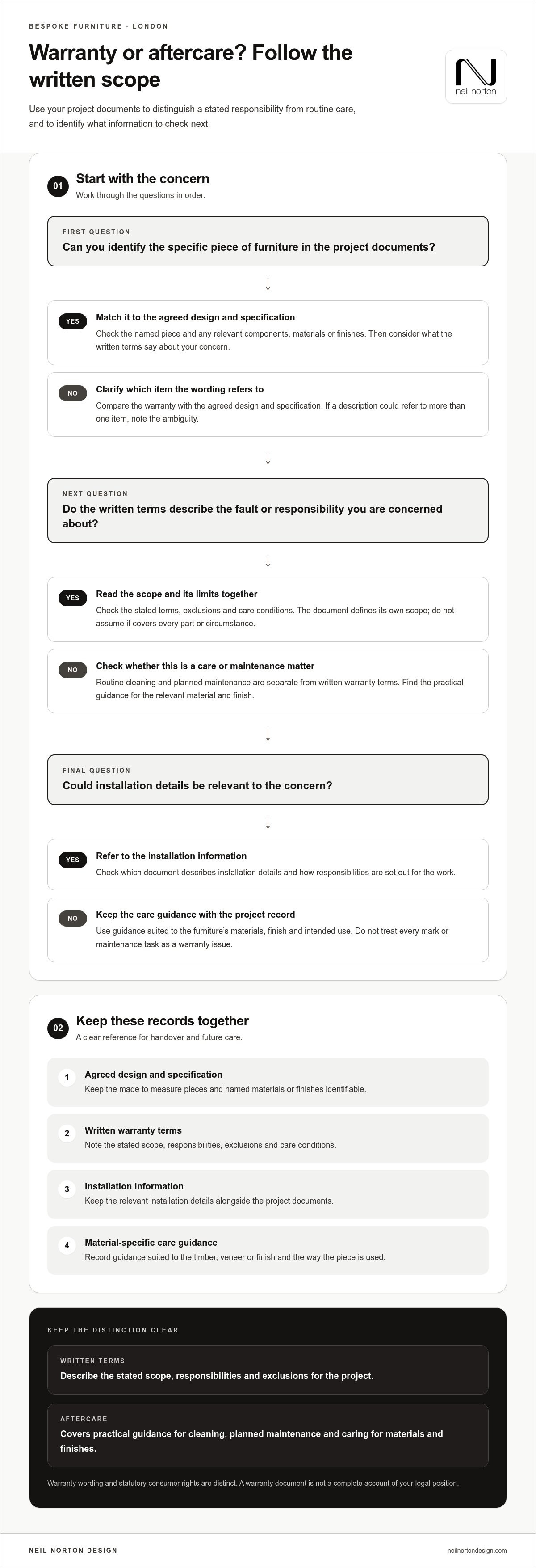
A warranty sets out terms for specified faults or responsibilities. Its meaning depends on what the document says about the particular project, rather than an assumed standard period or remedy. It is also separate from routine cleaning, planned maintenance and accidental damage. Read the written terms to understand how they describe these matters and what falls within their scope.
This short woodworking demonstration shows one example of furniture repair:
What does a bespoke furniture warranty mean?
The general meaning of a warranty is a useful starting point, but the project’s written terms are what you need to understand. Read them alongside the agreed design and specification. Check that the furniture is identified clearly, including the made to measure pieces and any materials or finishes named in the documents.
Furniture, materials, finishes and installation can raise different questions. For example, you may want to know whether the terms refer to the cabinetry itself, a particular finish or work carried out during installation. Don’t assume one description covers every part of the project. Nor should you assume that a warranty covers routine upkeep or accidental damage, such as a spill, impact or scratch. Look for how the document describes each of these.
Why London homeowners should understand aftercare early
In a London renovation, bespoke furniture may need to fit around the existing details of a period property or coordinate with work in a new extension. Discussing aftercare as the design develops helps you understand what information to keep at handover, rather than trying to reconstruct material choices once the room is in use.
Care discussions should reflect how you intend to use each piece and the room it will occupy. A fitted wardrobe, a media cabinet and bathroom cabinetry serve different purposes. Timber, veneers and finishes may also call for different guidance. Consider the room’s exposure to sunlight, moisture or nearby heat where relevant. Neil Norton Design’s bespoke furniture range includes a variety of made to measure pieces, so materials and intended use form part of the design conversation.
Clear written scope gives you a shared reference before design, manufacture and installation begin. Keep the specification and care guidance together, and note which details relate to the furniture, finish or installation. This gives you a practical basis for understanding the project after handover, without treating every mark or maintenance task as a warranty issue.
What warranty documents for bespoke furniture should explain
A useful project document should identify the work it refers to and explain the responsibilities it describes. For a fitted wardrobe, for example, look for a clear link between the agreed design, the finished cabinetry and any separate installation information. A broad heading on its own is not enough. The detail beneath it defines what the wording means for your project.
Scope, responsibilities and exclusions
Read the warranty alongside the design specification, materials schedule and installation records. These documents may describe different parts of the work, so note where responsibility for each is set out. Exclusions and care conditions matter as much as the main wording because they explain the limits of the stated terms. Don’t assume that a reference to furniture automatically covers every component or circumstance.
Use this checklist to see whether you can find clear answers in the project documents:
Which made to measure pieces are identified, such as a wardrobe, bookcase or media cabinet?
Are relevant components, materials and finishes described clearly enough to match them to the specification?
Does the document distinguish workmanship from materials, finish and installation responsibilities?
What faults or responsibilities are addressed, and what exclusions or care conditions are stated?
Which document should you refer to for installation details and practical care guidance?
If a description could refer to more than one item, note the ambiguity before the project proceeds. Clear identification is particularly useful where a room combines several pieces or where a designer’s specification and installation information are separate. The aim is to make the written scope specific and easy to understand, not to assume wider coverage than the terms state.
Warranty wording and consumer rights
Contractual warranty wording and statutory consumer rights are distinct. A warranty document sets out its own stated terms, but it should not be treated as a complete account of your legal position. For current UK guidance on consumer rights, use official sources such as GOV.UK. This section does not interpret your circumstances or make claims about a particular remedy, deadline or warranty duration.
For bespoke furniture warranty and aftercare London, keep the approved specification and any warranty documents together, and make sure you can connect each document to the relevant piece. If you’re planning a project, discuss your bespoke furniture project with Neil Norton Design so the design and its written scope can be considered together.
Warranty versus aftercare: how to assess bespoke furniture support
Start with the detail you’ve noticed, then identify which project record is most relevant. A mark on a surface, a question about a door’s alignment and uncertainty about cleaning call for different information. The comparison below can help you organise your question before referring to the written terms and care information for your project.
Which issues belong in a warranty discussion?
A reported fault, a finish concern or a question about installation can be compared with the relevant project wording. Describe what you see without deciding in advance how it should be categorised. For example, note whether a cabinet door appears out of alignment, a finish has changed or a fitted edge raises a question. The written terms and circumstances determine how the specific issue is considered.
Describe normal wear, accidental damage or a change in use precisely. A mark from an impact differs from a concern about how a component functions, but the label alone does not establish whether any terms apply. Note when you first observed the issue, where it is and whether anything changed in the room or use of the furniture. This gives you a clearer account to compare with the project record.
Which care questions belong in aftercare guidance?
Use care guidance to answer practical questions about the actual finish: which cleaning method is stated, and are there instructions about moisture or heat? A surface in a bathroom may face different everyday conditions from a bookcase in a study. Don’t apply a general cleaning tip to every material or assume advice for one finish suits another.
If you’re unsure which guidance relates to a particular piece, match its material and finish to the specification before taking action. Keep notes about the care method you’ve used and any change you observe. That record helps separate a routine upkeep question from a concern you may wish to compare with the project documents. For bespoke furniture warranty and aftercare London, assess each issue in its own context rather than treating every mark or maintenance task alike.
Plan aftercare around materials, finishes and London living
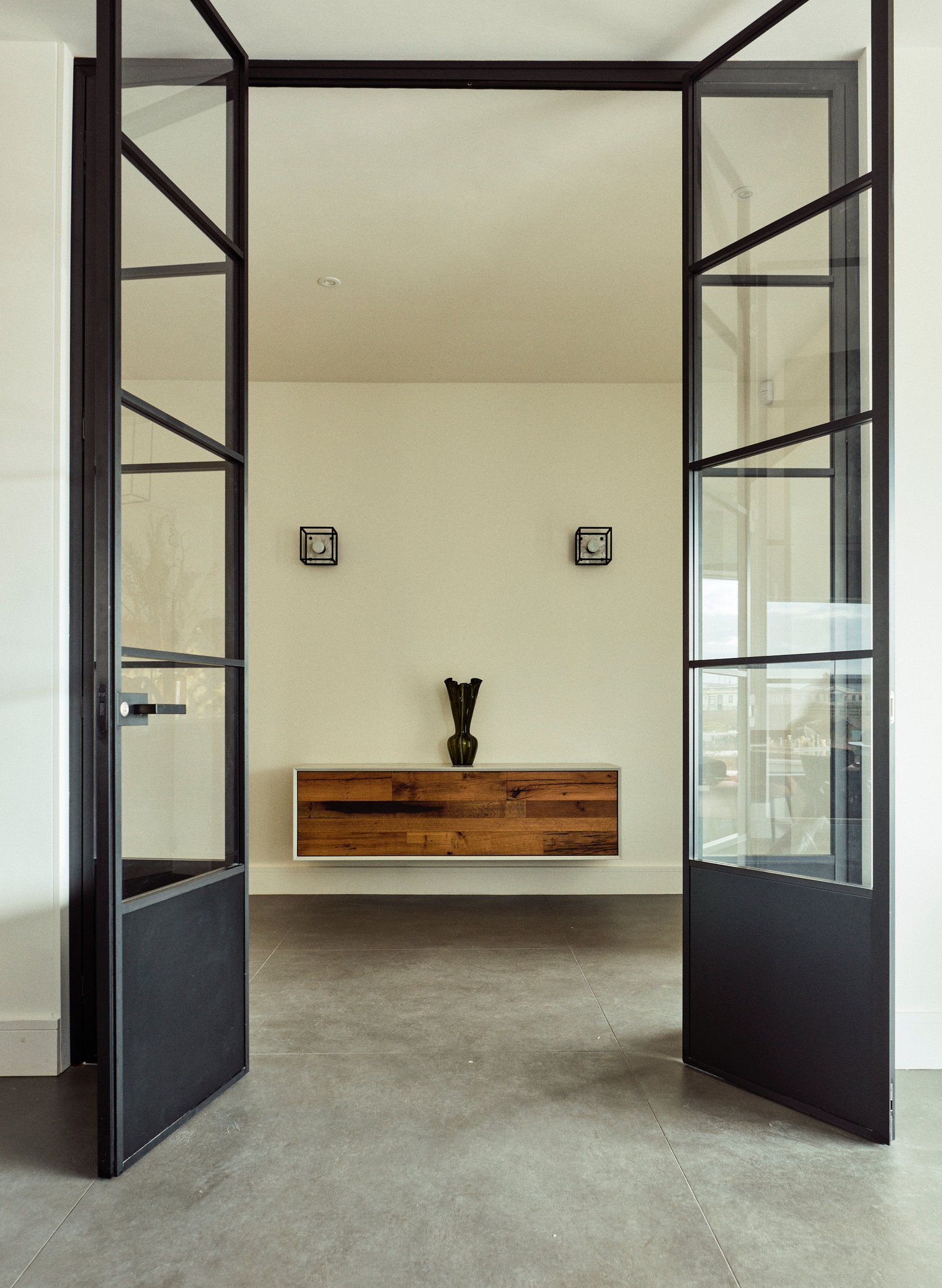
Good care planning starts with knowing exactly what has been specified. Timber, veneers and applied finishes can have different care requirements, so don’t assume one cleaning method suits every surface. A clear handover record gives you a practical reference as you settle bespoke furniture into your home and helps you describe any later concern accurately.
Create a care record for your bespoke furniture
At handover, organise the key information with your project documents. Keep a copy that’s easy to find, whether digitally or in a home file. Record the agreed materials and finishes, the care guidance supplied, any stated conditions of use and relevant installation details. This is especially useful when a room includes several pieces with different finishes or purposes.
Record the specification. Note which materials and finishes apply to each piece, such as a fitted wardrobe, bookcase or media cabinet.
Retain the care guidance. Keep cleaning instructions with the relevant furniture details, and note any stated considerations around moisture, heat or use.
Keep installation information. File the handover or installation details alongside the specification so you can refer to them if a question arises later.
These records help distinguish everyday upkeep from a reported concern. If you notice a mark or change, you can identify the material, finish and location rather than relying on memory. That context makes it easier to compare what you’re seeing with the agreed specification and care guidance. It does not, by itself, determine whether an issue relates to warranty terms.
Match everyday care to the chosen finish
Use the guidance for the finish selected for your project, rather than applying a general cleaning tip across different surfaces. If you’re unsure which instruction relates to a particular element, check the material and finish record first. Avoid introducing a new cleaning product or method without suitable guidance for that surface.
Room use matters too. A cabinet in a bathroom, a table used for daily meals and cabinetry in a home office face different patterns of use. Consider where furniture sits in relation to moisture, heat and direct sunlight, then follow the instructions relevant to its materials and intended use. No material should be treated as immune to wear. Thoughtful care supports its appearance over time, without promising that marks or changes cannot occur.
London homes vary widely, from period rooms with existing architectural details to newly created spaces. During renovation planning, consider when the furniture will be installed, how the room will be used and which other work may affect access to it. These project details can help make handover guidance practical for your home. Neil Norton Design creates a range of bespoke furniture, with material choices considered as part of each design. Whether your project is in London, Wimbledon, Chelsea, Knightsbridge, Notting Hill, Chiswick, South Kensington, Mayfair, Marylebone, Fulham or Putney, the room, materials and intended use should inform the design.
For a project shaped around your room, materials and intended use, Book a free design consultation
Choose a London bespoke furniture project built on clear responsibilities
A well-considered project connects design intent to the selected materials, how each piece is made and how it is installed in your home. When design, manufacture, delivery and installation sit within one managed project, you have a coherent basis for discussing the work. Clear written terms are still essential. A joined-up process does not replace them or create a warranty promise.
How design and installation shape project clarity
Neil Norton Design designs in Wimbledon, manufactures in its own workshop and installs with its own teams. The studio brings more than 25 years of craftsmanship and over 200 completed projects to its work. The design and material choices give you context for understanding what has been specified, while installation details connect the intended design to the finished room.
Material honesty matters beyond appearance. A clear specification identifies the materials and finishes chosen for your furniture, giving you a useful reference for care discussions after installation. Nothing is incidental: proportion, detailing and intended use all inform how a piece belongs in its setting. Care guidance should relate to those actual choices, rather than assume every cabinet or surface needs the same treatment.
This is especially useful when your project forms part of a wider London renovation. Room plans, existing architectural details and the sequence of other work can shape how fitted furniture is designed and installed. A joined-up process keeps those considerations connected, while written project documents provide the reference for scope and responsibilities. Neil Norton Design also works with interior designers, making and installing their designs as part of a coordinated project.
Discuss your bespoke furniture project in London
For a first discussion, bring any room plans or measured drawings you have, along with a clear idea of how you want the space to work. Note the furniture you’re considering, such as fitted wardrobes, a study or media cabinetry. Material and finish preferences are useful too, even if they’re early ideas. If you’re working with an interior designer, share the relevant design information so the conversation can focus on the project as a whole.
The first design consultation is free. It’s an opportunity to discuss your brief and consider how the intended use, room and material choices can inform the design. If you’re comparing bespoke furniture warranty and aftercare London options, include clarity of scope and handover information among your project considerations. Do not assume a particular warranty duration, coverage or aftercare package. Those details depend on the written project terms.
Shape your next bespoke furniture project with confidence
Your furniture should feel considered from the first design decision through to everyday use. As you plan, think about how each piece will serve your home, which materials express the design intent and what written information will help you care for it. This gives you a clear starting point for discussing bespoke furniture warranty and aftercare London, without assuming that every project has the same terms.
Use the first design conversation to connect your room, intended use and material preferences. You can also discuss how the project documents will describe the specified furniture and its finishes, so expectations are clear as the design develops. Careful planning makes room for both refined detail and practical considerations, keeping nothing incidental as your bespoke scheme takes shape.
A considered project begins with a clear brief and a shared understanding of what matters in your home. The right conversation can help turn those priorities into a design direction that feels distinctly yours.
Book a free design consultation
Your next step is to book a free design consultation and discuss the furniture you want to create.
Frequently Asked Questions
What should a bespoke furniture warranty cover?
A bespoke furniture warranty should clearly identify the furniture and set out the specific faults or responsibilities covered by its written terms. Look for references to relevant components, workmanship, materials, finishes and installation, as well as any exclusions or care conditions. For a London project with several fitted pieces, check that each item can be matched to the wording. The document itself determines its scope, so don’t assume every element is included.
How long should a bespoke furniture warranty last?
There’s no single duration that applies to every bespoke furniture warranty. The period, if one is stated, depends on the terms for that project, so read the document rather than relying on an assumed industry standard. Check how it describes when the period begins and which items it relates to. A warranty’s stated duration is separate from any statutory consumer rights that may apply to your purchase.
Does a furniture warranty cover installation?
It may address installation, but you shouldn’t assume it does. Check whether the written terms refer to fitting or installation work, and read that wording alongside your project specification and handover records. For example, a question about a fitted cabinet meeting the wall is different from a concern about its finish. The documents and circumstances determine how a particular issue should be considered.
Is aftercare the same as a furniture warranty?
No. Aftercare is practical guidance for using and maintaining your furniture, while a warranty sets out written terms for specified faults or responsibilities. If a cabinet surface needs routine cleaning, follow the relevant care instructions. If you notice a fault, compare the issue with the project documents. This distinction is useful when arranging bespoke furniture in Wimbledon, Chelsea or elsewhere in London, where your room’s use and materials shape everyday care.
Can a furniture finish be repaired if it is damaged?
A damaged finish may be repairable, but the result depends on the material, finish and nature of the damage. A small surface mark and a deeper scratch may call for different approaches, and a local repair may not look identical to the surrounding area. Before attempting a repair, check the finish-specific care guidance and document the damage. Don’t assume that repair work is covered by warranty terms.
What care does bespoke wooden furniture need?
Bespoke wooden furniture needs care suited to its particular material and finish, rather than a single rule for every piece. Keep the supplied guidance with your project documents and follow its instructions for cleaning and exposure to moisture or heat. For example, a table used daily may need different practical consideration from a bookcase in a study. Avoid applying an unfamiliar cleaner or treatment without suitable guidance for that finish.
Do UK consumer rights apply alongside a furniture warranty?
Yes. A commercial warranty is separate from statutory consumer rights, which may apply to your purchase. In the UK, the Consumer Rights Act 2015 sets requirements concerning satisfactory quality, fitness for purpose and matching the seller’s description. A warranty doesn’t replace those rights. The details of how the law applies can depend on the circumstances, so consult current official UK guidance for your situation rather than treating this answer as legal advice.


Comments